- Sustainability TOP
- Environment
- Biodiversity Conservation
Biodiversity Conservation
Basic Approach
The Isuzu Group's business activities depend on the natural world that nurtures biodiversity while at the same time having various impacts on it. The Isuzu Group has therefore developed the Isuzu Group Policy on Biodiversity, referring to guidelines such as the Ministry of the Environment's Guidelines for Private Sector Engagement in Biodiversity and the Declaration of Biodiversity by Keidanren. We are committed to promoting actions that harmonize biodiversity with our business activities to achieve a sustainable society. To achieve the Aspiration of conserving native biodiversity outlined in Isuzu Environmental Vision 2050, we work in collaboration with NGOs and other stakeholders to conserve the native biodiversity in the areas surrounding the Isuzu Group's operations. Additionally, Isuzu has endorsed the Declaration of Biodiversity by Keidanren since January 2020.
| Isuzu Environmental Vision 2050 | 2030 Environmental Roadmap | |
|---|---|---|
| Aspiration | 2030 Challenge | Global Action |

Conserve native biodiversity in local communities |
|
|
Isuzu Group Policy on Biodiversity (Formulated in 2018)
Basic Vision
We, the Isuzu Group, understand the relationship all of our business activities have with the ecosystem.
We support action that helps achieve a sustainable society through a harmony of business activities and biodiversity.
Action Guidelines
- Each employee learns and has an understanding that our business activities are enabled by biodiversity and at the same time, are affecting it.
- We engage in activities that reduce our impact on biodiversity and protect it in all of our business activities.
- We protect biodiversity from a global perspective, taking into account the diversity of local communities.
- We promote cooperation and collaboration with our stakeholders in order to improve our conservation activities.
- We contribute to local communities, placing valuing on communication and cooperation with stakeholders through disclosing information on activities and other initiatives.
Initiatives
Assessment of Dependency and Impact on Nature
Isuzu uses the tool ENCORE*1 to understand the extent of our dependence and impact on nature. We have assessed these dependencies and impacts throughout our value chain and created a heatmap. Moving forward, we will advance the evaluation of risks and opportunities related to natural capital based on these results and our business operations. We aim to reduce risks and seize opportunities: for raw material procurement, by strengthening engagement with our business partners through communication on reducing environmental impact, GHG emissions, and related matters; and for manufacturing and use, through initiatives aligned with the 2030 Environmental Roadmap.
Heatmap of Dependencies*2
| Ecosystem services directly provided | Ecosystem services that enhance production processes | Ecosystem services that mitigate direct impacts | Ecosystem services that protect from disturbances | |||||||||||||||||
|---|---|---|---|---|---|---|---|---|---|---|---|---|---|---|---|---|---|---|---|---|
| Animal-derived energy | Natural materials such as fibers | Genetic resources | Groundwater | Surface water | Pollination | Soil quality | Ventilation | Water circulation | Water quality | Breakdown of pollutants by organisms | Dilution function by air and water | Filtration function | Noise and light pollution reduction | Flow regulation | Climate regulation | Disease reduction | Protection from floods and wind | Erosion prevention by vegetation | Pest control | |
| Raw material procurement | ||||||||||||||||||||
| Manufacturing | ||||||||||||||||||||
| Usage | ||||||||||||||||||||
-
- Low
- Medium
- High
Heatmap of Impacts*2
| Land-use change | Direct extraction | Climate change | Pollution | Other | |||||||
|---|---|---|---|---|---|---|---|---|---|---|---|
| Land use | Freshwater use | Marine use | Water use | Other resource use | GHG emissions | Air pollution | Water pollution | Soil pollution | Waste | Noise and light pollution, etc. | |
| Raw material procurement | |||||||||||
| Manufacturing | |||||||||||
| Usage | |||||||||||
-
- Low
- Medium
- High
- *1Exploring Natural Capital Opportunities, Risks and Exposure
- *2Regarding raw material procurement, since various raw materials (such as petroleum, minerals, glass, and natural rubber) and procurement processes (such as chemicals, metals, electronic components, and tires) are involved, we took care to avoid underestimation by adopting the materials and processes with the highest degrees of dependency and impact.
Promoting Biodiversity Conservation Efforts
Isuzu conducts biodiversity conservation activities at its Fujisawa and Tochigi Plants in collaboration with nearby universities. In 2013, Isuzu has conducted surveys of the flora and fauna on its plant premises. The results revealed that at both plants, insufficient forest maintenance was causing imbalances in the ecosystem and an overgrowth of invasive species, weakening the public-benefit functions of the satoyama (traditional rural landscapes). Based on advice from the universities, we have been maintaining the plant sites since fiscal 2017, including developing areas where native species can thrive. Since 2017, annual surveys have confirmed a decrease in invasive species and a trend toward improving the imbalance in the ecosystem.
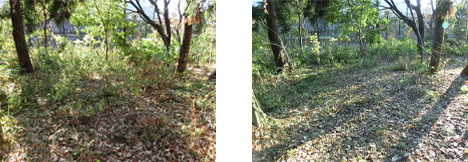
Fujisawa Plant: Maintaining the site's forested area
(Left: Before, Right: After)
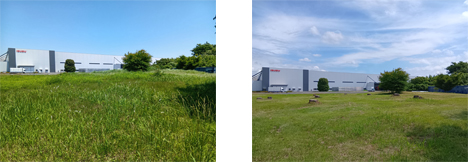
Tochigi Plant: Maintaining the site's greenery area
(Left: Before, Right: After)
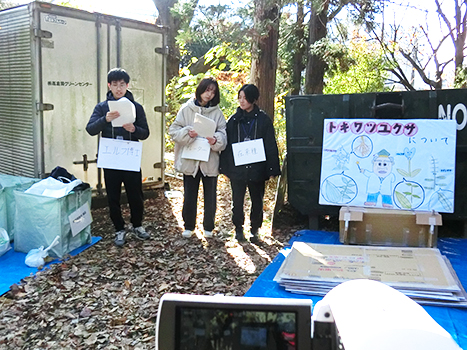
In addition, at the Fujisawa Plant, we drew on the expertise of a local university laboratory for an explanation of the plants growing within the activity area on the site and of the methods for removing invasive plant species. On the day, the presenters used A0-size panels and played the roles of plant characters to give an easy-to-follow explanation, helping to deepen employees' understanding of biodiversity conservation and raise their awareness of it.
Promoting Efforts to Protect Local Ecosystems
We promote efforts to protect regional ecosystems in local communities where we conduct business, working to conserve them along with their biodiversity. In addition, by encouraging these activities across the entire Isuzu Group, we remain committed to protecting global biodiversity.
Watarase-yusuichi Conservation Activities
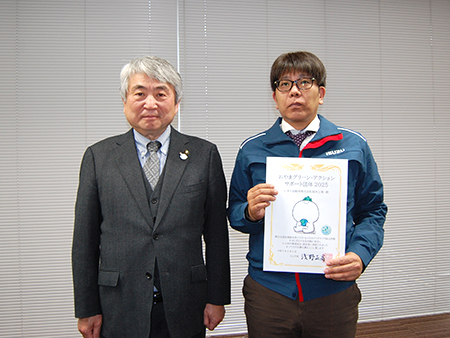
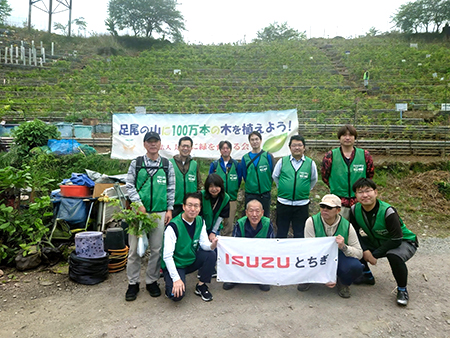
Since 2016, Isuzu has been involved in conservation activities at the Watarase-yusuichi near its Tochigi Plant. The Watarase-yusuichi is the largest wetlands in Japan; it serves an important flood control function that prevents flood damage in the region, and it is registered under the Ramsar Convention as a habitat for numerous plants and animals, including endangered species. Isuzu, along with volunteers from its Tochigi Plant, nearby Group companies, and their families, participates in activities such as reed cutting, removal of invasive plants, and litter cleanup, organized by local governments and NPOs. The ongoing conservation activities conducted with local residents have borne fruit, and storks have been confirmed visiting and nesting in the Watarase-yusuichi. In fiscal 2022, Isuzu received a letter of appreciation from Tochigi City as an Environmental Conservation Organization, and it has received a letter of appreciation from Oyama City for five consecutive years, from fiscal 2022 to fiscal 2026, as an Oyama City Watarase-yusuichi Wetland Conservation Support Organization. Furthermore, the Tochigi Plant is involved in tree planting activities in Ashio, located upstream along the Watarase River, which flows into the Watarase-yusuichi. Ashio was once devastated by smoke pollution from copper smelting, leading to the deforestation of the surrounding mountains. By participating in reforestation efforts, Isuzu aims to create opportunities for learning about environmental conservation through activities both upstream and downstream.
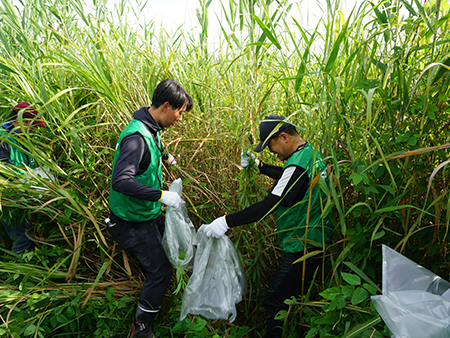
Participating in Activities to Develop Forests That Supply Water in Kanagawa Prefecture
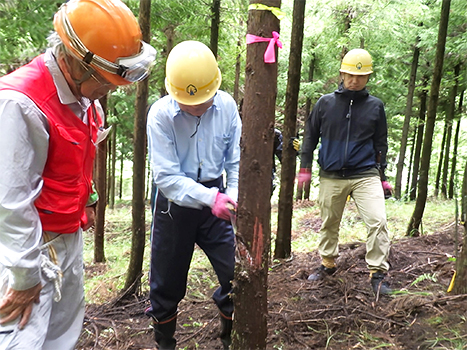
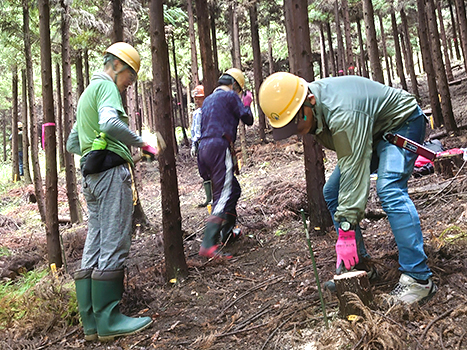
Since fiscal 2019, the Isuzu Fujisawa Plant has been participating in Kanagawa Prefecture's Forest Restoration Partner project, carrying out the Minamiashigara City 21st Century Forest conservation activities and the Yadoriki Water Source Forest conservation activities in Ashigarakami District in order to protect the forests that are the source of the groundwater used by the plant. Since fiscal 2020, Group companies within the Fujisawa Plant have also joined these efforts. Through thinning work to restore neglected forests to a healthy state, and through nature observation activities, participants are reminded of the importance of biodiversity and the significance of preserving the forests that serve as water sources. Although activities were suspended in fiscal 2021 and fiscal 2022 to prevent the spread of COVID-19, they resumed in fiscal 2023. In September 2025, eight employees from three companies participated in the conservation activities, and in November 2025, 18 employees from three companies and their families took part in the thinning work.
Isuzu Plaza's Biotope
At Isuzu Plaza, a biotope has been established to replicate the unique ecosystem of the Fujisawa region, where the plaza is located. Since fiscal 2020, we have been collaborating with a research laboratory at a local university, which has given us a wide range of advice, including on revising the content of the tree labels, and we are making improvements so that the biotope serves as a place of relaxation for the community where everyone can feel closer to nature. We encourage students to utilize this space for fieldwork and as a practical platform for considering community coexistence. We also provide them with opportunities to present their research findings to Isuzu. Additionally, employees are learning anew the importance of ecosystem conservation while drawing inspiration from the innovative ideas of the students.
Isuzu Afforestation Voluntary Activity in Thailand
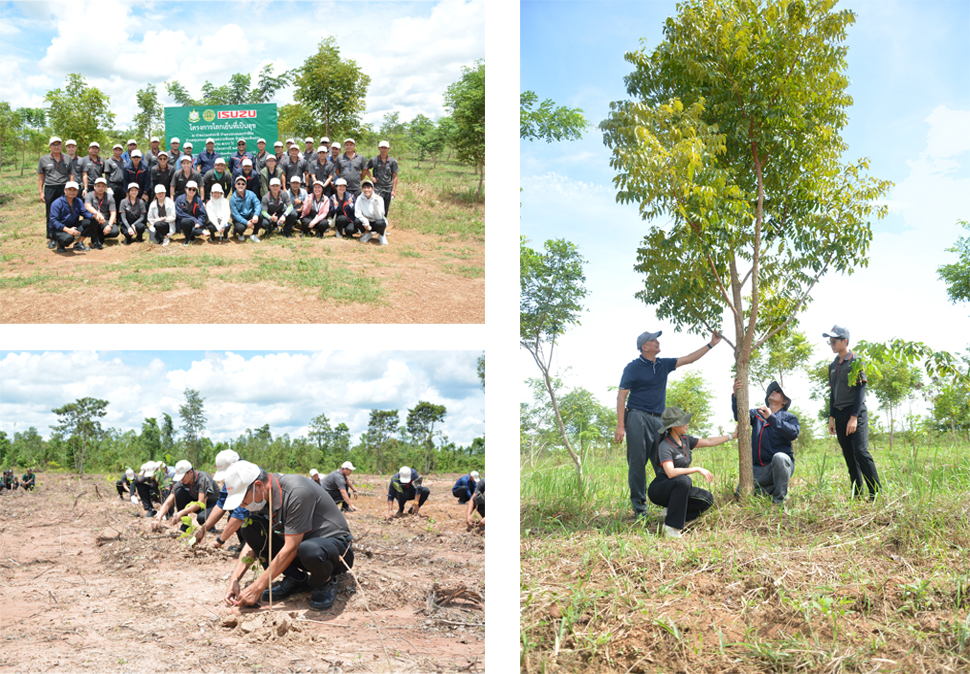
At Isuzu Motors Co., (Thailand) Ltd. (IMCT), Isuzu has been continuously conducting the "Isuzu Afforestation Voluntary Activity" in collaboration with the Royal Forest Department under Thailand’s Ministry of Natural Resources and Environment, with the aim of conserving forest ecosystems. In FY2026, we conducted the 13th such activity.
In September 2025, in the Khwae Rabom - Si Yat Forest, located in Sanam Chai Khet District, Chachoengsao Province, we planted over 4,000 trees, including native species, across an area of approximately 3.2 hectares, with the aim of restoring the ecosystem.
In addition, from 2022 to 2024, we planted trees across a total area of approximately 12.8 hectares, and through these ongoing forest conservation activities, we are contributing to the conservation and enhancement of biodiversity.
Promoting Sustainable Procurement
Adoption of Environmentally Friendly Materials
Isuzu has replaced traditional wood used for truck beds with bamboo, a member of the grass family, in consideration of forest conservation. Bamboo grows quickly and can be used as a material in about five years, and its excellent durability makes it well suited to truck beds. Bamboo flooring material is being used in many vehicle models, including the new ELF released in March 2023.

Developing Human Resources to Build a Society in Harmony with Nature
Isuzu has been conducting regular environmental education for employees since fiscal 2017 to raise environmental awareness and deepen understanding of Isuzu's environmental activities. This education is provided through a combination of e-learning and in-person training, which also helps reduce CO2 emissions associated with employee travel. Starting in fiscal 2024, Isuzu introduced common environmental education for executives and personnel responsible for environmental activities across the entire Isuzu Group. This initiative aims to enhance understanding of Isuzu Environmental Vision 2050 and the 2030 Environmental Roadmap. This activity will be expanded to all employees of the Isuzu Group in the future, facilitating human resource development so that each member of the Isuzu Group can contribute to the realization of Isuzu Environmental Vision 2050 alongside our customers and partners.
Communication with the Local Community Surrounding the Plant
At the Isuzu Fujisawa Plant, we provide an opportunity for the officers of local residents' associations from six neighboring districts to learn about Isuzu's and the Fujisawa Plant's environmental conservation initiatives. In November 2025, nine participants from the Chogo district attended the event. Additionally, although not from neighboring areas, we also introduce our environmental conservation initiatives during plant tours for visitors from Fujieda City in Shizuoka Prefecture and Matsubara City in Osaka Prefecture.
