- Sustainability TOP
- Social
- Human Rights
Basic Approach
In February 2022, Isuzu established the Isuzu Group Human Rights Policy (hereinafter referred to as the Policy), and in December 2023 the Policy was revised in light of ISUZU ID, the new corporate philosophy system announced in May of that year. The Policy complies with the United Nations Guiding Principles on Business and Human Rights and reiterates Isuzu's commitment to contributing to the realization of a sustainable society by conducting business activities that respect human rights as part of its corporate social responsibility, at a time when companies are expected by the international community to foster a corporate culture of respect for human rights and to take action across all their business activities. In accordance with the Policy, Isuzu will comply with international norms, laws and regulations, Group norms, and other applicable rules; build a Group structure for promoting human rights; conduct human rights due diligence; and provide appropriate education for officers and employees. In addition, recognizing the importance of respect for human rights in business, we will engage in dialogue with stakeholders and work to promote understanding among our business partners as well. The Policy is currently published in nine languages so that a broader range of stakeholders can understand it. For details, please refer to the Isuzu Group Human Rights Policy.
The Policy has been signed by the President following approval at the Management Meeting and by the Board of Directors.
Management Structure
Amid expectations that companies will foster a corporate culture of respect for human rights and take action across all their business activities, the Isuzu Group conducts business activities that respect human rights as part of its corporate social responsibility. Human rights issues are deliberated by the Sustainability Committee, which is chaired by the President and composed of the officers in charge of each division, and important matters are reported to the Management Meeting and the Board of Directors. Implementation is led mainly by the Sustainability Dept., the dedicated department, together with the relevant divisions. Under the Sustainability Committee, the Social Promotion Subcommittee, a working group that addresses social issues, brings together representatives from all divisions to discuss human rights issues. In addition, at the Isuzu Group Sustainability Liaison Conference, we not only share information with the sustainability managers of Group companies but also appoint a person in charge of human rights at each company and share progress at the Group Human Rights Promotion Officers Meeting (Social Promotion Subcommittee). In this way, the Group works as one to advance initiatives that respect human rights.

Reports and Deliberations on Human Rights Issues at Each Meeting Body
| FY | Meeting Body | Main Agenda Items |
|---|---|---|
| FY2026 | Sustainability Committee | Report on initiatives toward the ethical employment of foreign workers |
| Social Promotion Subcommittee | Report on the establishment of a human rights grievance mechanism | |
| Group Human Rights Promotion Officers Meeting | Request to business partners for the dissemination of the "Isuzu Group Supplier Sustainability Guidelines" | |
| Isuzu Group Sustainability Liaison Conference | Sharing of progress on initiatives with executives of Group companies |
Education and Awareness for Respecting Human Rights
For employees:
To help employees recognize the importance of respect for human rights in corporate activities, we conduct basic human rights education for all employees of our Group companies in Japan and overseas. In addition, to ensure that new graduates and mid-career hires develop an awareness of respect for human rights in corporate activities, we have added basic knowledge of respect for human rights to our induction training programs. We also conduct training by job category on a regular basis; in fiscal 2026, we held a seminar on "Procurement and Sustainability" for employees of the Purchasing Division with the aim of putting human rights considerations into practice in the supply chain.
For executives:
We invite outside experts to give lectures on human rights for our executives and to take part in dialogues with them. In fiscal 2024, the theme was "Business and Human Rights," and in fiscal 2026, "Ethical Employment of Foreign Workers."
For business partners:
To promote business activities that respect human rights throughout the supply chain, Isuzu has held annual human rights seminars for business partners since fiscal 2022. In fiscal 2026, we provided business partners with a video explaining the Isuzu Group Supplier Sustainability Guidelines.
Initiatives
Under the Isuzu Group Human Rights Policy, the Isuzu Group is developing human rights due diligence processes with reference to guidelines such as the OECD Due Diligence Guidance for Responsible Business Conduct and the Japanese Government's Guidelines on Respecting Human Rights in Responsible Supply Chains. Based on the results of the human rights risk assessment conducted in fiscal 2024, we identified the following two themes as priority human rights issues to be addressed. We are currently promoting our human rights initiatives with a focus on these priority themes. Priority Theme 1: Issues of Foreign Workers within the Group, Including Sales Companies and the Broad Supply Chain Priority Theme 2: Management of Human Rights Issues and Initiatives in the Value Chain, Including Logistics and Downstream Value Chain

Human Rights Due Diligence Medium- to Long-Term Plan
FY2023–FY2024: Isuzu DD Framework Development Phase
FY2025–FY2027: Group-wide DD Framework Rollout Phase
FY2028–FY2030: Practice & Evolution of the DD PDCA Cycle Phase
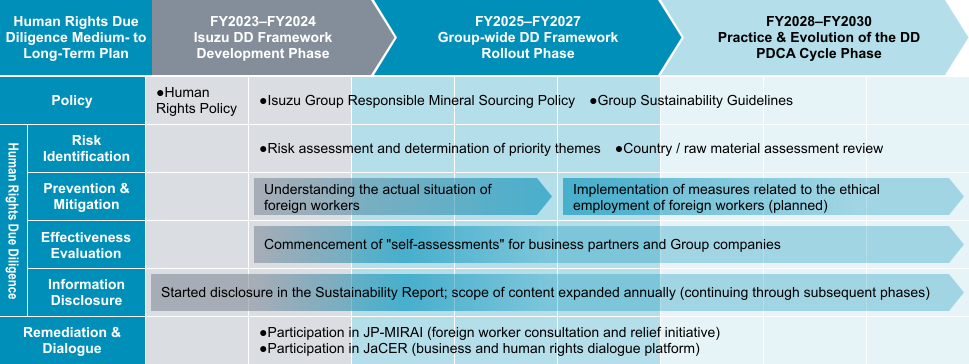
- *DD: Due Diligence
Human Rights Risk Assessment
Isuzu identifies potential human rights risks through activities such as research into human rights issues that may arise from corporate activities globally and sustainability self-assessment surveys of Group companies and business partners. In fiscal 2024, we selected priority human rights themes to address from among the identified issues, and are implementing risk prevention and mitigation measures centered on these priority themes.

Expansion of Risk Assessment Scope
We regularly review our risk assessments. In fiscal 2026, we conducted risk identification for four minerals: cobalt, natural graphite, lithium, and nickel.
Advancing Human Rights Due Diligence at Overseas Group Companies
Isuzu has begun building a framework for overseas Group companies to independently establish and operate their own human rights due diligence. Through training sessions and workshops designed to identify and visualize significant human rights risks according to each company's and country's specific circumstances, we are addressing risks unique to individual companies while also strengthening governance across the Group.
Initiative 1: Practical Training on Human Rights Due Diligence
In March 2026, we conducted human rights training for ESG Committee members and senior management at Isuzu Vietnam Co., Ltd. (hereinafter referred to as "IVC"), a Group company in Vietnam.
The training deepened participants' understanding of the importance of respecting human rights throughout the supply chain, and provided a practical approach to conducting on-site audits and assessments of suppliers.
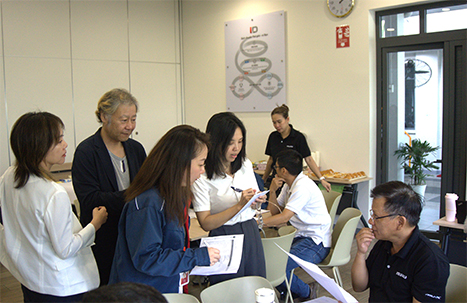
Initiative 2: Impact Assessment and Identification of Priority Issues for Human Rights Risks in Vietnam
We conducted a human rights risk assessment workshop for IVC's senior management to identify and prioritize significant human rights risks within the company.
Based on the results of the assessment, we identified "occupational health and safety across the value chain" and "information management" as priority issues, and have begun considering measures to address them.
Initiatives for Priority Themes
Priority Theme 1: Issues of Foreign Workers within the Group, Including Sales Companies and the Broad Supply Chain
Approach and Direction of Initiatives
Currently, many technical intern trainees and other foreign workers are employed in the Japanese automobile industry. We have confirmed that foreign technical intern trainees are widely accepted by the Isuzu Group and its business partners. In light of this situation, we position issues related to foreign workers as one of the key human rights themes in Isuzu's supply chain and are taking a range of measures to address them. We will continue to expand the scope of our initiatives, focusing on programs to improve the working environment, including interviews with foreign workers, and giving priority to subsidiaries and business partners considered to carry high business and country risk.
Results for FY2026
In fiscal 2026, treating forced labor related to foreign workers (the recruitment fee issue) as a priority issue, we surveyed the number of foreign workers at our Group companies in Japan, broken down by nationality and residence status. In addition, to ensure objectivity and impartiality, Isuzu has conducted interviews with foreign workers every year since fiscal 2023. In fiscal 2026, with the cooperation of the Global Alliance for Sustainable Supply Chains (ASSC), we conducted an on-site survey program that included document verification as well as verification of the living and working environment. The program is carried out against international standards and Isuzu's own standards. As a result, some issues were identified in areas such as occupational safety, but in every case we confirmed a high level of transparency in employment management and sound management systems. Going forward, we will continue and expand these activities with the cooperation of Group companies and business partners, and will respond sincerely to proposals for improvement and other feedback.
<On-site Survey Records>
| Date | Company | Nationality / Number of Participants |
|---|---|---|
| January 2025 | Company G (Group company) | Philippines / 2 people |
| January 2025 | Company H (Business partner) | Indonesia / 6 people |
| November 2025 | Company I (Group company) | Philippines / 4 people India / 4 people Indonesia / 3 people Nepal / 1 person |
<Examples of Improvements Tracked After On-site Survey>
Company H (Business partner): During a survey conducted in January 2025, it was found that technical intern trainees were not familiar with how to report emergencies via the 110 (police) and 119 (fire/ambulance) numbers, and that postings were not displayed in their native language. In a follow-up review six months later, improvements were confirmed, including the posting of emergency contact information and a disaster preparedness handbook in the workers' native language, as well as enhanced training at the time of employment. In addition, regarding the issue of company-provided housing lacking locked safes, it was confirmed that this had been improved through the installation of personal safes.
Example of Initiatives: Implementation of Our Own Follow-up Program
Additionally, as one of our own programs, we held a plant tour in October 2023 for foreign technical intern trainees from our business partners, inviting them to our Fujisawa Plant. The goal of this initiative is to deepen their understanding of their own companies' products by letting them see for themselves how the parts they manufacture are ultimately incorporated into the final products, and to enhance their motivation for their work. Participants shared feedback such as, "Seeing our products installed in the display vehicles at Isuzu Plaza made me feel a closer connection to Isuzu than ever before," and "The plant tour allowed me to reappreciate the importance of maintaining and improving quality and ensuring stable supply, and I would like to apply the examples I saw during the tour within my own company."
Recruitment of Foreign Workers in Accordance with Ethical Practices
Isuzu has been recruiting foreign technical intern trainees for many years. Initially, we began accepting trainees in order to improve and strengthen technical capabilities at our overseas Group companies. However, believing that by passing on manufacturing know-how more broadly we could make an even greater "international contribution through human resource development," in recent years we have accepted many foreign technical intern trainees under the supervising organization type of program. In addition to financial support at the pre-entry preparation stage as well as during the training period itself, we provide support throughout the process from recruitment to return home, including help in finding employment after trainees return to their home countries, and through these measures of our own we work to build an environment in which trainees can concentrate on their training.
Example of Initiatives: Support System for Foreign Engineers at Sales Companies
Our sales companies are working to smoothly welcome foreign engineers and to develop their skills. In fiscal 2025, representatives from major sales companies met roughly once every two months to exchange views on how to handle everything from training to retention of foreign engineers at sales companies. In addition, with the aim of "creating a workplace where everyone can thrive" by having Japanese and non-Japanese employees understand each other's culture and communication characteristics, we provided training using a "cross-cultural understanding e-learning" video.
Priority Theme 2: Management of Human Rights Issues and Initiatives in the Value Chain, Including Logistics and Downstream Value Chain
Approach and Direction of Initiatives
Isuzu aims to conduct socially responsible procurement together with our business partners in order to meet the expectations of our stakeholders. To share values relating to sustainability, such as the environment and human rights, across the entire supply chain of the Isuzu Group, Isuzu has established the Isuzu Group Supplier Sustainability Guidelines (hereinafter referred to as the Guidelines). In addition to asking our business partners to advance their own initiatives, we ask them to make the Guidelines known within their supply chains and to ascertain the actual situation there. Furthermore, we ask our major business partners to submit a Self-Assessment Questionnaire (SAQ), and where risks are identified, we conduct on-site or remote interviews and ask them to take action for improvement.
Approach to Surveying the Status of Sustainability Initiatives

Results for FY2026
By fiscal 2026, we had received signatures from business partners representing approximately 99% of our annual purchasing value, and SAQ responses from 407 major business partners (representing approximately 99% of our annual domestic purchasing value). The SAQs revealed sustainability risks at two business partners. For those business partners where risks were identified, we conduct on-site or remote interviews and ask them to work on improvements. At our Group companies, we have disseminated our approach to sustainability and have begun conducting SAQs and on-site surveys at major overseas sites.
Responsible Mineral and Raw Material Sourcing
The Isuzu Group considers the procurement of minerals and raw materials that contribute to human rights infringements, environmental destruction, illegal mining, and the financing of armed groups in conflict-affected and high-risk areas to be a serious problem. To strengthen our responsible sourcing efforts, we have revised the "Isuzu Group Responsible Minerals/Raw Materials Sourcing Policy" and renamed it the "Isuzu Group Responsible Mineral and Raw Material Sourcing Policy." We have also incorporated the requirements based on this policy into the "Isuzu Group Supplier Sustainability Guidelines" and ask our business partners to identify risks within their supply chains.
Since fiscal 2024, we have been conducting surveys using the CMRT and EMRT for 3TG (tantalum, tin, tungsten, and gold) and cobalt. In fiscal 2027, we conducted risk identification for four minerals: cobalt, natural graphite, lithium, and nickel. Going forward, we will work to expand the scope of our surveys in order to strengthen due diligence on these high-risk raw materials.
The Policy has been signed by the President following approval at the Management Meeting and by the Board of Directors.
Initiatives for Key Labor Issues Outside of Priority Themes
Isuzu Group Responsible Minerals/Raw Materials Sourcing PolicyRisk Assessment for Labor Issues
Isuzu identifies risks in areas such as occupational health and safety, discrimination, harassment, mental health, and management failures arising from differences in values. Each quarter, we assess whether such risks have materialized and evaluate the countermeasures in place, working to prevent risks and to minimize their impact when they do materialize.
Prevention of Child Labor and Forced Labor
At Isuzu, we recognize the prohibition of child labor and forced labor as an important human rights issue. With regard to child labor, in accordance with the laws and regulations of each country and region as well as the standards of the ILO (International Labour Organization), we prohibit child labor and do not allow young workers to engage in hazardous work. With regard to forced labor, we are addressing issues related to foreign workers in particular as a priority theme. In the supply chain as well, Isuzu prohibits child labor and forced labor in accordance with the Isuzu Group Supplier Sustainability Guidelines. At present, no instances of child labor or forced labor have been confirmed at Isuzu or its business partners.
Dialogue and Consultation with Employees
Isuzu is committed to improving the workplace environment and respecting human rights through dialogue with employees. We also respect freedom of association and the right to collective bargaining, and engage in ongoing consultation through labor-management councils and other channels.
Occupational Health and Safety
Based on the Isuzu Health and Safety Philosophy, we position the safety and health of employees as the foundation of our business activities and promote our activities accordingly. This value is a universal one that does not change with the times or the environment. We promote health and safety activities not only for employees employed by Isuzu but also for the employees of all affiliated companies and business partners who work on our premises, regardless of employment status.
Living Wage Support
Isuzu discusses wage levels and their allocation with the Isuzu Motors Labor Unions , the union to which a majority of our employees belong, in annual labor-management negotiations, and makes revisions as necessary. Additionally, we have established certain compensation standards for bonuses and other benefits during leaves of absence to help safeguard employees' livelihoods. Isuzu and the Isuzu Motors Labor Unions have concluded an agreement on Isuzu's own age-based minimum wages in addition to the Company's internal minimum wage agreement, providing a safety net for the living standards of employees. These agreements also have a ripple effect on specific minimum wages (minimum wages set for particular industries), and the Isuzu Motors Labor Unions reports them to the National Federation of Isuzu Motors Workers' Unions, its upper-level organization, thereby encouraging increases in minimum wages across the entire Group.
Prohibition of Discrimination
At Isuzu, based on the Isuzu Code of Conduct, we thoroughly enforce the prohibition of discrimination and work to create a workplace environment where diverse talent can thrive, through fair evaluation and treatment, the recruitment and development of diverse talent, and respect for women's rights.
Fair Evaluation and Treatment
Isuzu has introduced an evaluation system based on each employee's job, role, contribution, growth, and performance. This allows us to draw out the full potential of each employee, while ensuring fair and equitable treatment through an evaluation process that does not permit discrimination based on irrational factors such as social status, origin, race, creed, or gender — thereby enhancing employees' sense of fulfillment and motivation to grow.
Recruitment and Development of Diverse Talent
Black Economic Empowerment Policy Initiatives at Isuzu Motors South Africa
The Isuzu Group's basic policy is to employ local people, and we actively recruit locally in the countries and regions in which we operate. Isuzu Motors South Africa (IMSAf), which produces and sells commercial vehicles, buses, and LCVs for South Africa and neighboring countries, not only promotes employment in the region but also endorses and actively supports South Africa's own Broad-Based Black Economic Empowerment (B-BBEE) policy. In fiscal 2026, employees considered HDSA* accounted for 48% of managers and 88% of the workforce. IMSAf has also achieved Level 1 certification on the B-BBEE scorecard for four consecutive years, establishing its position as an industry leader.
- *HDSA: Abbreviation of Historically Disadvantaged South Africans — South Africans who were unfairly discriminated against during the apartheid era, including Black people, Coloured people, and women, and who have thus been historically disadvantaged.
Respect for Women's Rights
Isuzu carries out initiatives in Japan and overseas on International Women's Day to promote women's empowerment and gender equality. In fiscal 2026, under the theme of "#GivetoGain," we promoted greater awareness and fostered an organizational culture through mentoring, events, and the sharing of stories about the achievements of female employees across various regions. Going forward, Isuzu will continue working toward realizing a workplace where diverse talent can thrive through these global initiatives.
Remedy and Dialogue
Relief
As consideration for human rights in corporate activities is becoming more important, Isuzu has established grievance and consultation mechanisms to appropriately identify human rights issues and respond to them promptly and fairly. In accordance with the United Nations Guiding Principles on Business and Human Rights, Isuzu is working for fair and appropriate remedies in response to human rights related consultations from stakeholders involved in its business activities and value chain. Isuzu, which has participated in the Platform for Responsible Acceptance of Foreign Workers (hereinafter referred to as "JP-MIRAI") since October 2022 and has joined the Japan Center for Engagement and Remedy on Business and Human Rights (hereinafter referred to as "JaCER") as a regular member since October 2025, receives complaints and reports from a wide range of stakeholders in the value chain through independent third-party platforms. Internally, Isuzu has also established an employee consultation desk; externally, it has established a business partner consultation desk and the Isuzu Customer Center.
Points of Contact for a Wide Range of Stakeholders
Isuzu receives inquiries related to human rights from a wide range of stakeholders, including workers in the Isuzu Group's value chain, local residents, and customers, using third-party platforms (JP-MIRAI and JaCER). As of fiscal 2026, there have been no consultations or reports concerning the Isuzu Group.
Points of Contact for Employees
Isuzu has established points of contact for reporting and consulting on compliance violations, misconduct, harassment, and other issues. In addition to internal points of contact, Isuzu has established an external point of contact at an outside law firm to ensure independence. The number of reports and consultations received through internal and external points of contact in fiscal 2026 was 76.
Business Partner Consultation Desk
Isuzu has established a Business Partner Consultation Desk within the Enterprise Risk Management Dept. as a neutral point of contact to receive inquiries from business partners related to compliance and human rights.
Isuzu's Grievance Handling Mechanism Through a Third-Party Platform
Isuzu's grievance handling mechanism through a third-party platform (hereinafter referred to as this "Mechanism") covers cases that occur in the value chain of the Isuzu Group and that have had, or are likely to have, a negative impact on internationally recognized human rights.
Establishment of Complaint Handling Points of Contact
Eligible persons: All stakeholders, including workers in the Isuzu Group's value chain, local residents, and customers Languages supported: 32 languages
Eligible persons: Foreign workers of the Isuzu Group and its business partners who work in Japan
Languages supported: 23 languages
Basic Principles of Our Response
This Mechanism is operated in accordance with the United Nations Guiding Principles on Business and Human Rights, on the premise that confidentiality is protected and retaliation is prevented, and in a manner that ensures fairness, transparency, and accessibility. We also make judgments based on internationally recognized human rights standards and strive for continuous improvement.
Complaint Handling Process of Third-Party Points of Contact
With respect to claims received through this Mechanism, we confirm the facts and assess their relevance to our business according to the nature of the claim, handle them appropriately, and take corrective and recurrence-prevention measures as necessary. In handling a claim, we place importance on dialogue with the complainant and provide appropriate information on progress. If a case is determined to fall outside the scope of this Mechanism, we explain the reason and, to the extent possible, direct the complainant to an appropriate point of contact.
Third-Party Contact Point Complaint Handling Monitoring Structure
The operation of this mechanism is continuously monitored through collaboration between the Enterprise Risk Management Dept. and the Sustainability Dept., and is reviewed and overseen by the Sustainability Committee. Significant cases are reported to senior management as necessary.
Dialogue with Stakeholders
Isuzu believes that it is important to proactively convey our thoughts to various stakeholders and actively listen to their voices. We recognize the importance of respecting human rights when conducting business, and we will continue to engage in dialogue with stakeholders while seeking the assistance of external experts on human rights. Through these efforts, we aim to make progress in addressing human rights issues.
Results for FY2026
Dialogue Between Executives and External Experts
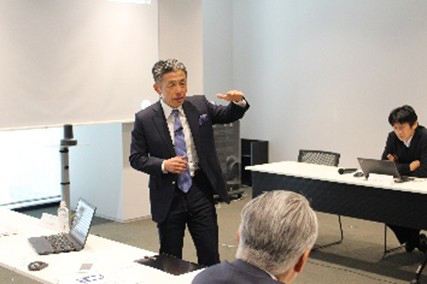
In February 2026, we held a seminar for executives on the theme of "Business and Human Rights," featuring Hiroshi Ishida, Secretary-General of Caux Round Table Japan (CRT), as a guest speaker. Standing members of the Sustainability Committee deepened their understanding through the lecture and dialogue with the external expert, and discussed responses to human rights risks such as the acceptance of foreign workers and forced labor.
Participation in Stakeholder Engagement Program Organized by the Caux Round Table Japan (CRT)
Isuzu has participated in the Stakeholder Engagement Program organized by CRT every year continuously since 2023 to acquire the latest knowledge required to implement human rights due diligence.