- Sustainability TOP
- Environment
- Climate Change Measures
Climate Change Measures
Basic Approach
Many different natural disasters linked to climate change are significantly affecting our society, and there is now a global consensus that climate change is the most important issue to be resolved as a matter of urgency. Based on this awareness, carbon-neutral strategies are rapidly being introduced in Japan and many other countries, and the move toward a decarbonized society is gaining momentum worldwide. The Isuzu Group has set the goals of "Zero GHG emissions from operations" and "Zero GHG emissions across the product lifecycle" as Aspirations in Isuzu Environmental Vision 2050. We view addressing climate change as an opportunity for further growth for the Isuzu Group and are advancing various initiatives to achieve these goals. Additionally, Isuzu expressed its support for the recommendations of the Task Force on Climate-related Financial Disclosures (TCFD) in 2021 and is advancing the development of business strategies to address climate change through scenario analysis.
| Isuzu Environmental Vision 2050 | 2030 Environmental Roadmap | |
|---|---|---|
| Aspiration | 2030 Challenge | Global Action |

Zero GHG emissions from operations |
|
|

Zero GHG emissions across product |
|
|
Disclosure Based on the TCFD Recommendations
Governance
To promote sustainability throughout the entire Group, Isuzu has established the Sustainability Committee, which is chaired by a Director of the Board, with the officers responsible for each domain serving as standing members. Specialized environmental and social subcommittees have also been established under the Sustainability Committee, where detailed discussions are held on individual issues. In particular, with regard to efforts to achieve carbon neutrality, we have established a structure for examining specific response policies and activities and implementing them in practice through the Business CN* Promotion Subcommittee, which promotes activities to achieve carbon neutrality in business activities with a focus on production, and the Product CN* Promotion Subcommittee, which promotes various activities that contribute to the carbon neutrality of products through decarbonization technologies and decarbonized energy.
- *CN: Carbon-neutral
Risk Management
Overall risks related to climate change are managed under a Group-wide risk management system led by the Group Chief Risk Management Officer (CRMO). The Sustainability Committee identifies and assesses specific climate change risks and manages the progress of countermeasures based on each risk's potential impact on the Company's businesses.
Metrics and Targets
Isuzu Environmental Vision 2050 sets forth two goals: achieving zero greenhouse gas (GHG) emissions throughout the lifecycles of our Group products and services by 2050, and achieving zero direct GHG emissions from the Group's business activities by 2050. As interim targets toward these goals, the 2030 Environmental Roadmap calls for expanding our lineup of carbon-neutral (CN) vehicles to meet diverse customer needs on the product side, and for reducing the Group's CO2 emissions (Scope 1 + Scope 2) by 50% from 2013 levels by 2030 on the business activities side. Furthermore, we endorse the Paris Agreement's aim to limit the global temperature increase to 1.5°C, and we continue to work toward setting science-based targets for reducing GHG emissions. Toward the realization of a decarbonized society, we will work on climate change countermeasures through both our business activities and our products.
Strategy
Isuzu conducted a scenario analysis under the long-term environmental scenarios of a 1.5°C and a 4°C rise in temperature compared with pre-industrial levels, and identified the risks and opportunities that climate change poses to the Isuzu Group's business activities and products. Measures to address these risks include compliance with strengthened environmental regulations and the development of new technologies. At the same time, society expects the creation of innovations that contribute to a decarbonized society, and Isuzu recognizes that responding appropriately will lead to new business opportunities. Working toward carbon neutrality by 2050, the Isuzu Group is deploying multi-pathway carbon-neutral solutions and reducing direct GHG emissions from its business activities. Through these efforts, we aim to reduce risks and capitalize on opportunities.
Scenario Analysis
Long-Term Environmental Scenarios
4°C Scenario (RCP8.5*1, SSP3*2)
- A society in which dependence on fossil fuels continues, climate change progresses, and natural disasters increase.
- There is a scramble for fossil fuels and anti-globalization advances due to increasing inequality, leading to the dysfunction of international governance.
- Economic stagnation due to vulnerability to disasters is anticipated.
1.5°C Scenario (RCP2.6*1, SSP1*2, 2DS*3)
- A carbon-neutral society in which social and industrial structures have changed dramatically due to stricter regulations and technological innovation.
- The Isuzu Group's product lineup is expected to undergo major changes depending on the application, and there will be major changes in business activities.
Products
<Vehicles>
- Development and provision of next-generation powertrains such as EVs advances for light commercial vehicles that support short-distance, low-volume transportation
- New trends such as electrification emerge for medium- and heavy-duty commercial vehicles
- Internal combustion engines continue to play a major role in vehicles that support long-distance, high-volume transportation, such as medium- and heavy-duty commercial vehicles
<Powertrain>
- The use of sustainable, decarbonized clean energies
- A need arises to develop and market powertrains with unprecedented fuel efficiency and no energy loss, as well as products equipped with such powertrains
Service
- Automated driving, platooning, and full trailer trucks currently undergoing demonstration tests become commonplace
- More efficient transportation methods are routinely used
Business Activities
- The Company switches to decarbonized clean energy in production and other business activities
- The Company minimizes resource input and ensures the effective use of waste with a view to achieving carbon neutrality
- *1RCP2.6: Climate scenario created by the United Nations Intergovernmental Panel on Climate Change (IPCC)
- *2SSP1: Socioeconomic scenario created by the United Nations IPCC
- *32DS: Socioeconomic scenario created by the International Energy Agency (IEA)
Risks and Opportunities
| Category | Risks | Opportunities | Countermeasures | Level of Impact on Operations | |
|---|---|---|---|---|---|
| Risks and opportunities associated with transition to a decarbonized society | Government policy regulations |
|
|
|
High |
| Technology |
|
|
|
High | |
|
|
|
High | ||
| Market |
|
ー |
|
High | |
| Reputation |
|
|
|
Moderate | |
| Material risks and opportunities that arise from increased natural disasters, depleted water supplies, and other such events |
|
|
|
High | |
- *FCV: Abbreviation of "Fuel Cell Vehicle."
Initiatives
Products and Services
To achieve zero GHG emissions across the entire lifecycle of the Isuzu Group's products by 2050, the Isuzu Group aims to make its entire lineup of new vehicles sold worldwide carbon-neutral, and has been advancing technical verification of powertrains toward this goal. As a result, we have confirmed that BEVs, FCVs, CN fuels, and hydrogen internal combustion engines are all effective technologies capable of contributing to the carbon neutrality of commercial vehicles. At the same time, the performance and operating conditions required of commercial vehicles vary greatly depending on the application and region. Isuzu will pursue the realization of carbon neutrality while maintaining logistics functions through a "multi-pathway" approach that leverages the strengths of each technology and selects the optimal powertrain for each use case. Building on this, Isuzu is advancing the development of electric vehicles with an eye toward mass production, and launched the new ELF EV in 2023 and the BEV flat-floor route bus ERGA EV in 2024. Additionally, for FCVs (Fuel Cell Vehicles), we are advancing the development of heavy- and light-duty FC trucks and FC route buses, among others. To accelerate these carbon neutrality initiatives, we are using "The EARTH lab.," an electrification development building that has begun operations at the Fujisawa Plant, to advance the development of optimal systems for electric vehicles. In addition, for applications and regions where electrification is difficult, internal combustion engines that run on carbon-neutral fuels* remain an important option, and we continue to advance the development of vehicles compatible with CN fuels, whether liquid or gas. The Isuzu Group will collaborate with customers, fuel operators, government bodies, and related industries to provide optimal solutions that integrate vehicles, energy, and services.
- *CN fuels: Abbreviation of carbon-neutral fuels, such as biofuels and synthetic fuels derived from renewable energy.
Development and Adoption of Next-Generation Vehicles
Light-Duty EV Truck
The N-Series (ELF in Japan) is the first mass-produced BEV truck developed by Isuzu to help realize a carbon-neutral society. In February 2025, we added garbage trucks and aerial work platform trucks to the lineup. Isuzu has developed and adopted its own electric Power Take Off (PTO) to supply power to truck upper structures.

Heavy-Duty FCV Truck
Since 2020, we have been collaborating with Honda R&D Co., Ltd., and through the public road testing conducted from December 2023 to September 2025, we have been collecting data, accumulating insights, and identifying technical challenges in preparation for market introduction.
We will continue to promote technological development in a multi-pathway approach based on Isuzu Environmental Vision 2050 and will develop FCVs as part of the product development and rollout that is suited to regional conditions and social trends.

Light-Duty FCV Truck
Light-duty FCV trucks have been jointly planned under the Commercial Japan Partnership Technologies (CJPT) project since 2021, and since 2023 we have been supplying vehicles jointly developed by Isuzu and Toyota Motor Corporation to projects for the social implementation of hydrogen technology in Fukushima Prefecture, Tokyo, and Fukuoka Prefecture. Toward mass production, the two companies will jointly advance the development of an FC system, combining the ELF EV as a base vehicle with a Toyota-made fuel cell system.

BEV Flat-Floor Route Bus
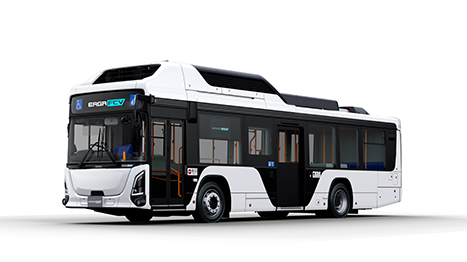
In May 2024, we launched Japan's first BEV flat-floor route bus, the ERGA EV. Isuzu believes that, since route buses tend to operate on relatively fixed routes and travel distances, BEVs are one of the most promising options for achieving carbon neutrality. The ERGA EV leverages the expertise Isuzu has cultivated over many years of route bus development, achieving barrier-free accessibility and quiet operation through its flat-floor structure. It has been adopted as a shuttle bus providing venue access transportation for Expo 2025 Osaka, Kansai, Japan. It is also being used in demonstration operations combined with autonomous driving technology, marking progress in the social implementation of next-generation public transportation.


Next-Generation FC Route Bus
Isuzu, in collaboration with Toyota Motor Corporation, is advancing the development of an FC route bus toward commercialization. This FC route bus uses the ERGA EV as its base vehicle, carrying forward the vehicle layout and barrier-free features developed for the BEV model. FCVs do not emit CO2 during operation and are capable of short refueling times and long-distance operation, making them a promising technology for high-utilization public transportation. Going forward, Isuzu will continue to provide solutions tailored to diverse needs based on its multi-pathway approach, including both BEVs and FCVs, contributing to the realization of a sustainable mobility society.
North American Medium-Duty Battery Electric Trucks
To contribute to GHG reduction in North America, Isuzu announced the development of medium-duty battery electric trucks equipped with Accelera by Cummins powertrains.
Leveraging the strengths of both Cummins Inc. and Isuzu, we will support our customers in achieving zero emissions.

Providing EVision, a Total Solutions Program for BEV Introduction and Operational Support
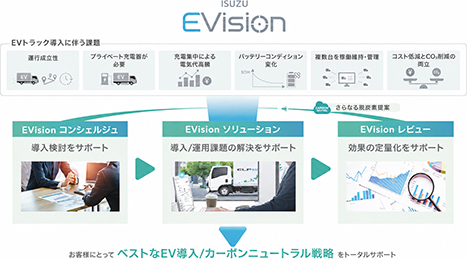
In 2023, Isuzu began offering EVision, a total solutions program for the introduction and operational support of BEVs, in conjunction with the market launch of the mass-produced BEV, the ELF EV. EVision is a solutions program designed to help customers achieve carbon neutrality by supporting them in evaluating the introduction of commercial EVs, resolving implementation challenges, quantifying results, and proposing further improvements. In anticipation of an increase in the number of EVs deployed at each customer locations, we offer an energy management service, "SmartEVer," that minimize in electricity demand charges associated with EV charging, and will continue to expand the EVision service lineup so that a wide range of customers can operate EVs with without concerns.
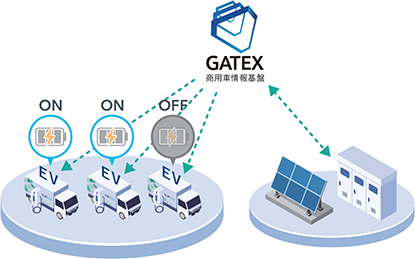
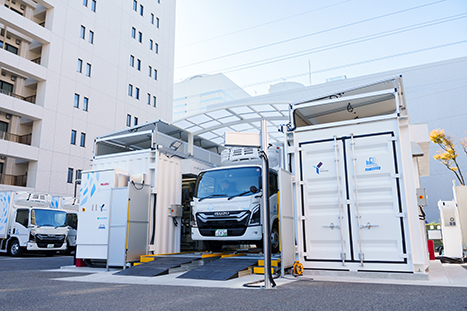
EVision Cycle Concept (Commercial Vehicle Battery Swapping EV Concept)
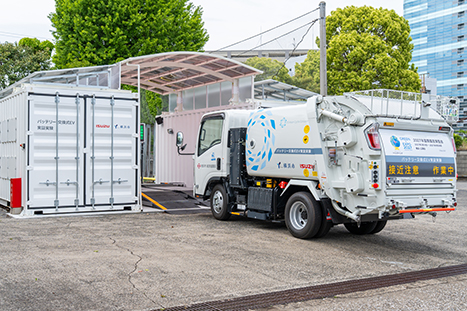
As a new option for achieving carbon neutrality, Isuzu is studying and developing battery-swapping solutions. By separating the operation of the vehicle and the battery, this approach is expected to help address a range of societal challenges. In fiscal 2026, we will begin customer demonstration trials in Japan and in-house demonstration trials at our local subsidiary in Thailand to confirm the practical usefulness of battery swapping in real-world operations, and we will apply the insights gained to the development of vehicles and battery stations.
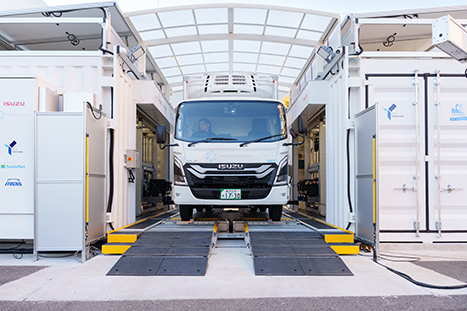
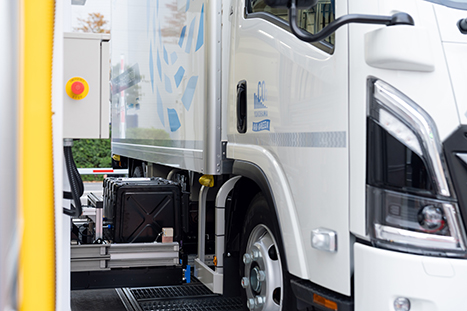
Battery station
CN Gas Fuels (Initiatives for Low-Carbon Fuels)
Natural gas vehicles run on natural gas as fuel, and replacing that fuel with biomethane or e-methane* derived from renewable energy makes it possible to reduce and eliminate carbon emissions while making use of existing vehicles and infrastructure. In addition, the volume of biomethane adoption has been increasing globally in recent years. Development of e-methane production technology is also being actively pursued, and its wider adoption is expected going forward. In the previous fiscal year, we took part in a new demonstration using biomethane produced at the Osaka Expo, among other efforts to advance carbon neutrality in mobility through CN gas fuels.
- *e-methane: Synthetic methane produced from CO2 and hydrogen derived from renewable energy.
Adoption of and Response to Carbon-Neutral Fuels
As a companywide cross-functional activity, the Isuzu Group is continuing its initiatives aimed at the social implementation of CN fuels, including evaluating the impact of CN fuel use on vehicle performance and durability. As a specific example, Isuzu, together with eight partner companies, applied to the Tokyo Metropolitan Government's 2024 Technology Development Support Project for the Promotion of New Energy, and our proposal, "Development of New HVO* Blended Fuel, Construction of a Supply Chain, and Social Implementation," was selected. The nine selected companies have long sought to contribute to the realization of a sustainable society through the use of biofuels and other resources. Each company will develop, produce, store, transport, and demonstrate the use of new HVO-based biofuels in its respective field, and will continue efforts to establish supply chains and achieve social implementation. Additionally, to accelerate the adoption of CN fuels, we will engage with CN fuel producers to raise fuel quality issues and propose improvements, and we will actively participate in creating systems that do not require additional investment in distribution processes such as supply and sales.
- *HVO: Hydrotreated Vegetable Oil. HVO is a fuel made by hydrogenating biomass (biological resources) and can be used either alone or mixed with diesel oil. It is one of the CN fuels that are more effective in reducing CO2 emissions compared to petroleum-derived diesel oil.
Business Activities
To achieve zero direct GHG emissions from business activities by 2050, the Isuzu Group is working on reducing overall energy consumption and expanding the use of renewable energy.
Reduction of Total Energy Consumption
We are continuing to implement energy-saving activities, including streamlining processes, reviewing and optimizing the operation of equipment, and visualizing energy consumption. By reassessing our conventional operating methods and applying successful initiatives across the Group, we are contributing to a reduction in total energy consumption throughout the Isuzu Group's business activities. The Isuzu Group supports climate-related laws, regulations, and policies in each country where it operates, including Japan's Energy Conservation Law*1 and Act on Promotion of Global Warming Countermeasures*2, and works to reduce its energy use through the various reports it files with government agencies under those laws.
- *1The Energy Conservation Law, which relates to the rationalization of energy use and the shift to non-fossil energy
- *2The Act on Promotion of Global Warming Countermeasures
Energy Savings Through a High-Efficiency Melting Furnace
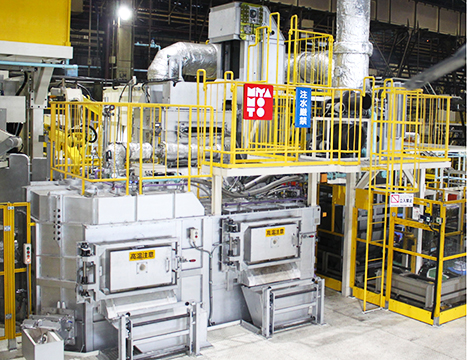
Isuzu, in collaboration with Miyamoto Manufacturing Co., Ltd. and Goko Sangyo Co., Ltd., developed a high-efficiency aluminum melting and holding furnace in 2019, and began mass-production operation in 2020 on the 2,000-ton die-casting lines at the Fujisawa Plant and Isuzu Engine Manufacturing Hokkaido.
This equipment incorporates a furnace structure designed to maximize preheating effects, as well as technology that identifies the required melting volume based on operating conditions and optimally controls combustion capacity. As a result, energy consumption has been reduced by approximately 40% compared to conventional equipment, achieving both productivity and environmental performance.
Furthermore, by modifying the combustion equipment, the furnace is capable of accommodating a variety of fuels, including hydrogen, and is expected to contribute to the realization of carbon neutrality in the future.
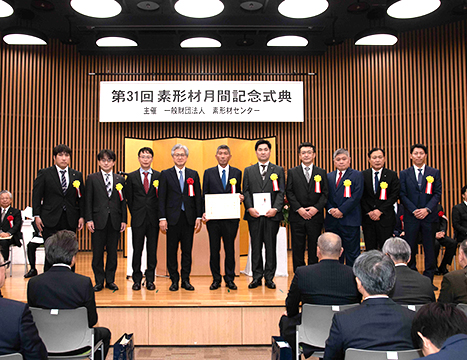
In recognition of the advanced nature of this technology and its potential ripple effects across the industry, it received the METI Manufacturing Industries Bureau Director-General Award at the 41st Metal Forming Technology Awards, held on November 7, 2025.
Expansion of Environmentally Conscious Sales Bases
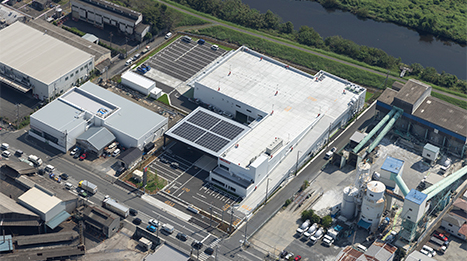
When building or renovating sales bases, we are reducing energy use by adopting LED lighting and renewable energy. In addition, when building new sites, we are expanding the number of environmentally conscious bases by installing wastewater treatment equipment that is more environmentally friendly than conventional equipment, in order to prevent pollution from the wastewater generated by vehicle maintenance and washing.
Creating Clean Energy
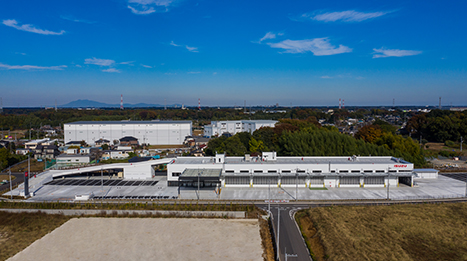
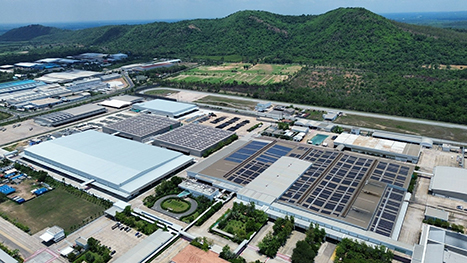
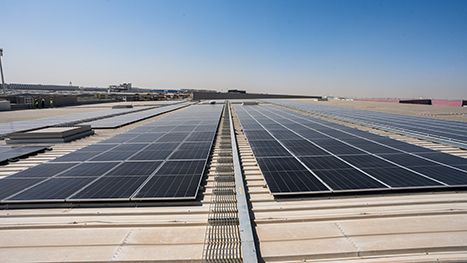
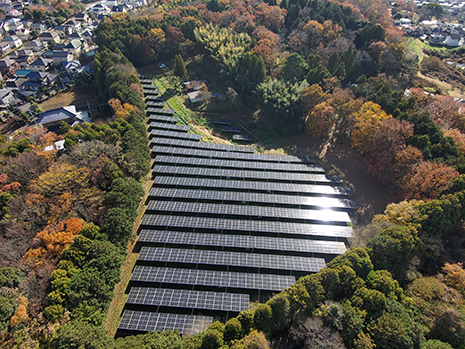
The Isuzu Group is working to expand its use of electricity derived from renewable energy at its business sites, as well as to generate clean energy on its own. In Japan, we have installed solar power generation facilities at the Fujisawa and Tochigi plants, with a combined generation capacity of 1,389 kW. In addition, domestic consolidated subsidiaries are also installing solar power facilities through on-site PPAs, expanding efforts to generate renewable energy across the Group, including at production sites and sales companies. The Isuzu Group's overseas companies are also actively installing solar power generation facilities. In addition to Thailand, installations are progressing at sites in the UAE, South Africa, Kenya, Vietnam, Malaysia, and other locations, expanding efforts to generate and use renewable energy globally. Going forward, the Isuzu Group will continue to introduce energy-saving equipment and expand the installation of clean energy generation facilities, including solar power facilities, to reduce the environmental impact of its business activities.
Switching to Clean Energy
We are also progressively transitioning to clean energy for the energy used at our business sites. Isuzu is expanding its adoption of electricity derived from renewable energy sources. Starting in fiscal 2026, by combining an off-site corporate PPA with electricity backed by non-fossil certificates, we have switched all of the purchased electricity used at the Fujisawa Plant to power derived from renewable energy. In addition, starting in fiscal 2028, we plan to introduce an off-site corporate PPA at the Tochigi Plant as well, further expanding our use of renewable energy. Through these efforts, the proportion of purchased electricity derived from renewable energy sources is steadily increasing. As for fuels, clean energy technologies comparable to those for electricity have not yet been established. In response to this situation, Isuzu has been using carbon offset city gas (a global environmentally friendly fuel) as part of the fuel at its plants since fiscal 2022. Carbon offset city gas is liquefied natural gas that offsets the GHGs emitted during the entire process from natural gas extraction to combustion using CO2 credits (carbon offsets), and is therefore considered not to generate net CO2 emissions on a global scale even when burned. These CO2 credits are voluntary credits, but they are issued by internationally reputable organizations and come from projects that meet the procurement requirements, quality standards, and other criteria of the adopting company, ensuring that they have no significant adverse effects on local communities or ecosystems. To make these initiatives widely known to users of natural gas vehicles, Isuzu also supplies carbon offset city gas to the natural gas station located at the Fujisawa Plant. All natural gas supplied at this station is carbon offset city gas.
Reducing CO2 Emissions in Logistics Processes
Isuzu aims to reduce CO2 emissions in its logistics processes by 1% annually and is implementing measures to achieve this goal.
Main Initiatives
- Review transportation methods
- Promote fuel-efficient driving during transportation
- Increase marine transportation (modal shift) through the development of new shipping routes
- Strictly manage truck transport according to cargo volume
- Expand the use of returnable racks that can be folded for the return trip
- Expand trailer transport and improve cargo fill rates within containers
- Expand container round use
- Transition to clean energy at logistics sites
Review of Transportation Methods
The Isuzu Group is continuously reviewing and optimizing the transportation routes for products and parts, and is working to reduce CO2 emissions associated with transportation through measures such as joint transportation within the Group. To date we have coordinated delivery services from parts distribution centers around the days when dealers and repair shops are closed, and switched the entire round-trip delivery route between the Fujisawa area and the Tochigi area, which previously used ordinary roads, to expressways, thereby improving fuel efficiency and reducing CO2 emissions. Starting in fiscal 2026, we have expanded the scope of these efforts, working together with other companies and parts manufacturers to further reduce environmental impact and improve transportation efficiency. For parts replenishment deliveries to production sites, we previously operated two 10-ton trucks from Monday to Friday each week, with one running round trips and the other running one-way trips only. With the start of joint deliveries with other companies, this was changed to round-trip operation using a single full trailer. Through this initiative, we improved loading efficiency by consolidating cargo with other companies' parts, reducing both the number of delivery runs and fuel consumption. Before the improvement, operating two 10-ton trucks resulted in a total daily driving distance of 1,380 km; after the change to round-trip operation using a single full trailer, this was shortened to 920 km. As a result, we achieved a reduction of 228 runs annually and approximately 26,000 liters in annual fuel consumption, also contributing to reduced CO2 emissions from transportation. In addition, for collection logistics from parts manufacturers, we previously operated nine runs per day; however, uneven cargo volumes and operating times between runs had become a challenge, lowering transportation efficiency. In fiscal 2026, we optimized cargo allocation and operations and revised our joint delivery arrangements accordingly. As a result, we reduced the number of runs and improved loading rates, cutting the number of daily runs from nine to seven. This achieved a reduction of 488 runs annually and shortened driving distance from 2,826 km to 2,198 km per day, a reduction of 153,232 km annually. In addition, the average truck loading rate improved from approximately 60% to approximately 80%, significantly improving transportation efficiency. These measures have also been positively received by drivers, who have noted benefits such as more consistent loading rates and reduced workload, contributing not only to improved logistics efficiency but also to better operational quality. We are also working to reduce the environmental impact of our warehouses, which serve as our delivery bases. We are switching from diesel-powered forklifts to electric forklifts, with the goal of eliminating diesel-powered forklifts by fiscal 2031. Starting in fiscal 2025, we upgraded the lighting in our Tochigi-area warehouses to LED lighting with motion sensors, introducing a system that switches the lights off automatically when no one is present. As a result, CO2 emissions were reduced and the working environment improved. We will continue to strengthen collaboration with other companies, further optimize transportation routes and joint logistics, and expand consolidated transportation, working to achieve both reduced environmental impact and a stable logistics system as we pursue sustainable logistics.


Transition to Clean Energy at Logistics Sites
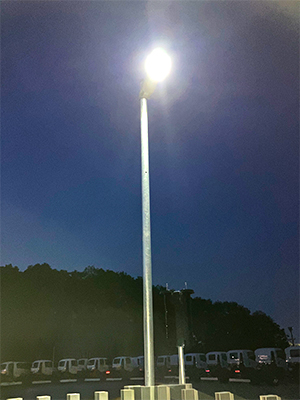
The Isuzu Group's logistics sites — which were also involved in supplying repair parts for EV buses related to Expo 2025 Osaka, Kansai, Japan — had been examining effective measures to help achieve the target set out in the Isuzu Group's 2030 Environmental Roadmap of reducing CO2 emissions (Scope 1 + Scope 2) from business activities by 50% from fiscal 2014 levels by 2030. At the same time, since many of these sites are leased properties, there were constraints on installing large-scale equipment such as solar power panels. We therefore began examining the use of electricity derived from renewable energy. While switching to renewable energy was expected to increase costs at some sites, the relevant committee held repeated discussions from the perspectives of the SDGs and LNOB (Leave No One Behind). As a result, we prioritized optimization across all logistics sites, moving beyond the boundaries between individual sites and departments, and advanced our decarbonization efforts. Through this initiative, nine sites switched to electricity derived from renewable energy, accounting for approximately 6.2 million kWh annually, or 70% of total electricity usage across our logistics sites. In addition to reducing environmental impact, this initiative has also helped raise employee awareness of environmental issues, and momentum is building to communicate our commitment to the environment both internally and externally. As part of our renewable energy efforts, we are also advancing site improvements at motor pools (temporary vehicle storage areas) with energy conservation and environmental considerations in mind. We first switched from mercury lamps to LED lighting, completing the rollout across all motor pools. We are also progressively installing solar lights that store power generated by solar panels during the day for use at night. Since motor pools use less electricity than plants or warehouses, combining LED lighting with solar lights allows us to reduce electricity usage in a way suited to the characteristics of each site. We will continue to pursue both reduced environmental impact and a safe, comfortable working environment.
Increasing Container Round Use
The Isuzu Group is implementing carbon-neutral activities across its entire logistics operations, and in the Tochigi, Fujisawa, Yokohama Port, and Ageo areas we are working on Container Round Use (CRU), in which containers emptied of imported cargo are reused as export containers. Previously in the Tochigi area, empty containers for the export of knockdown (KD) parts packed at the Tochigi Plant were collected from Yokohama Port. Now, the Company picks up containers that other companies have emptied of imported cargo at an inland depot near the Tochigi Plant designated by the shipping company, and reuses them as export containers for KD parts. In the Fujisawa area, Isuzu collaborates with other companies to implement CRU by transporting containers emptied of imported cargo to an Isuzu Group warehouse near the Fujisawa Plant instead of returning them to Yokohama Port, and reusing them as export containers for KD parts. In fiscal 2026, we signed a CRU agreement with one additional shipping company. Under this initiative, empty containers arising after other companies unload their imported cargo are not returned to the port but are instead reused as containers for KD parts export cargo. This has reduced the transport of empty containers by 24 units annually. These CRU activities have been highly commended by the Japan Association for Logistics and Transport, and together with our cooperating partner companies we received the Special Award of the Logistics Environment Grand Prize for three consecutive years, from fiscal 2023 through fiscal 2025. We will continue to strengthen collaboration with related companies both within and outside the Group, further expanding CRU and improving transportation efficiency. By achieving both a stable logistics system and reduced CO2 emissions, we aim to realize sustainable logistics and contribute to carbon neutrality.


Inside and outside of the container for shipping KD parts in the CRU system
Expanding the Use of Biomass Materials
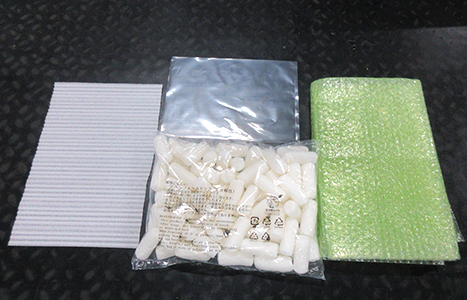
The Isuzu Group is introducing biomass materials for the packaging used in KD shipments to overseas assembly plants. By utilizing renewable, plant-derived raw materials, biomass materials help reduce the use of petroleum-derived resources while also contributing to lower CO2 emissions across the entire lifecycle, and we are expanding their use accordingly. Starting in fiscal 2018, we began switching from petroleum-derived products to biomass materials for A4-size plastic bags, which are used in the largest volume at approximately 9 million units annually. We subsequently expanded this to other sizes, and by fiscal 2024, we had switched all 10 sizes of plastic bags to biomass materials. For bubble wrap as well, starting in fiscal 2023, we switched all 16 sizes to biomass materials containing approximately 15% bio-based raw material. In addition, in fiscal 2026, as the fifth initiative in our biomass material rollout, we switched foam sheets to products containing 10% bio-based raw material. Based on physical property data provided by the material manufacturer, we confirmed that the switch would have no adverse impact on quality, workability, or safety, and determined that the new material offered performance equivalent to the conventional product. As a result, we applied it to nine foam sheet product codes, used at a volume of approximately 760,000 sheets annually (equivalent to approximately 35 tons by weight). We will continue to expand the use of plant-derived raw materials in packaging materials, helping to reduce environmental impact and contribute to the realization of a decarbonized society.
Improving Logistics Efficiency Through Consolidation of External Warehouse Functions
The Isuzu Group is promoting the reduction of environmental impact by improving logistics efficiency.
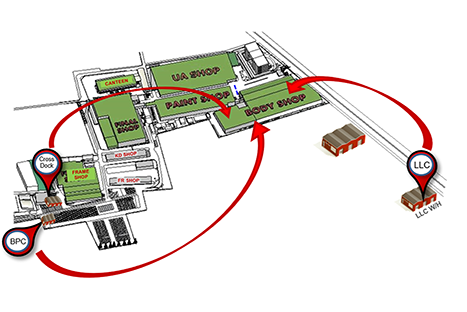
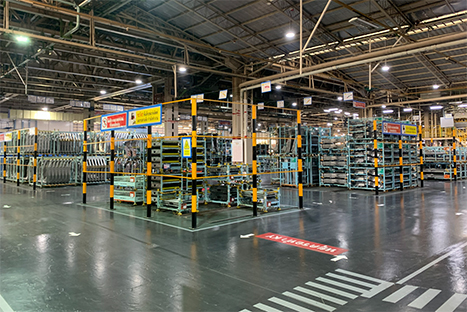
At the Samrong Plant of Isuzu Motors Co., (Thailand) Ltd. (IMCT), parts storage and supply functions, including those previously handled by external warehouses, were consolidated closer to the body assembly process as part of the plant reorganization. This initiative shortened parts transportation distances and improved material-handling efficiency, thereby optimizing the overall logistics process.
As a result, fuel consumption associated with logistics operations was reduced, resulting in annual savings of approximately 153 KL of diesel fuel and 53 tons of LPG. contributing to a reduction in the environmental impact of transportation.
Holding Fuel-Efficient and Safe Driving Seminars
Considering the lifecycle of Isuzu products, the majority of CO2 emissions comes from product (vehicle) use.
Isuzu has been holding seminars on fuel-efficient and safe driving in Japan and overseas since 1995, to provide its customers with tips on fuel-efficient driving in accordance with the performance of their vehicles.
Seminars Held over the Past Three Years
| Number of Seminars | Number of Participants | |
|---|---|---|
| FY2026 | 58 | 778 |
| FY2025 | 77 | 1,039 |
| FY2024 | 76 | 999 |
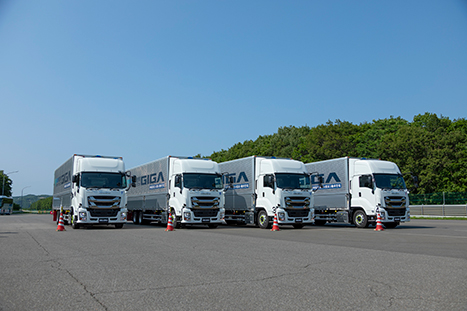
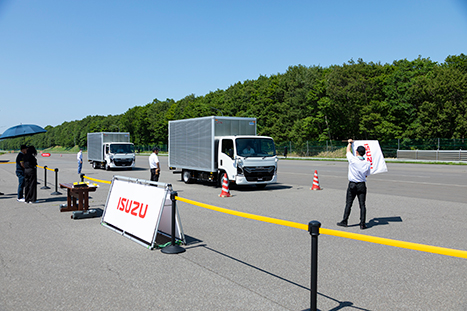
Fuel-efficient and safe driving seminar
Initiatives with Our Business Partners
Isuzu conducts procurement activities in accordance with the Isuzu Group Supplier Sustainability Guideline, asks our business partners to conduct their activities in line with the guideline as well, and requests that they sign a letter of consent to that effect. The guideline also sets out environmental requests, including from the perspective of green procurement, which we ask our business partners to address. In this way, we are strengthening sustainability and environmental management across the entire value chain together with our business partners. Since fiscal 2023, we have participated in the CDP Supply Chain Program, working to better understand our business partners' climate-related initiatives and GHG emissions and to strengthen our collaboration with them.
Initiatives with Yokohama City
In October 2023, Isuzu signed a Collaboration Agreement for Achieving Carbon Neutrality in the Commercial Vehicle Sector in Yokohama City with Yokohama City. The agreement aims to promote the adoption of carbon-neutral vehicles in the commercial vehicle sector within Yokohama City and collaboration on initiatives to enhance transportation efficiency contributing to decarbonization.
Based on this agreement, starting in November 2025, we began store deliveries to FamilyMart locations within Yokohama City using battery-swapping EVs, and subsequently, starting in June 2026, began a demonstration trial of waste collection operations within Yokohama City using garbage trucks.
By adopting a battery-swapping system, batteries can be swapped for fully charged ones in a short time, helping to reduce the downtime associated with charging, which is a challenge in the electrification of commercial vehicles. Through these demonstration trials, we will verify the operational benefits with the aim of improving on-site operational efficiency and the continuity of vehicle operations.