- Sustainability TOP
- Social
- Quality
Basic Approach
We earn the trust of our customers by creating products and services that satisfy them and by delivering high quality from various perspectives so that we can contribute to solving social issues.
Management Structure
Company-Wide Quality Assurance System
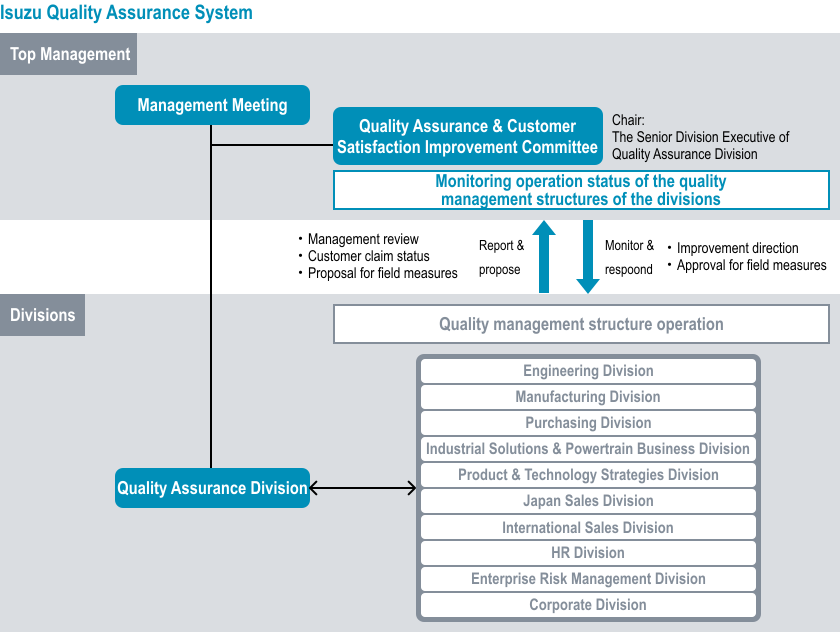
Isuzu has built the quality assurance (QA) system illustrated below with the aim of fully meeting its social and quality responsibilities as a manufacturer. Led by the Quality Assurance Division, the entire Company works together to improve quality. The Senior Division Executive of the Quality Assurance Division chairs a monthly meeting of the Quality Assurance & Customer Satisfaction Improvement Committee (Quality Assurance & CS Committee), where the senior management of all divisions share information on quality status and discuss CS improvement, and the Committee monitors how each division operates its quality management system. The outcomes are then applied to the QA activities of the business divisions.
Improving Quality within the Isuzu Group
By giving priority to quality in everything, Isuzu creates products that fully satisfy our customers and contribute to society, aiming to grow as a corporate group rich in humanity. To ensure the quality of Isuzu's products and services, it is important that we work carefully in each of the different stages of the value chain surrounding our products and services. We build readiness to assure quality in each of the different stages, including development, procurement, manufacturing and market launch, and manage the process accordingly. Through this, Isuzu ensures that its products and services fully satisfy customers. In the event that a customer has trouble with an Isuzu vehicle, we are organizationally ready to provide service and service parts to facilitate a quick recovery.
Isuzu always seeks to ensure that customers can feel secure about using Isuzu's products every day, and is committed to building long-term relationships of trust with customers.
Additionally, Isuzu's quality policy is to create and deliver products and services that satisfy its customers. Staying true to this policy, all companies in the Isuzu Group work together in quality improvement activities. This is based on our belief that we can deliver better products and services to our customers by improving the quality of business operations of all divisions, including back-office divisions. More specifically, we communicate our quality policy and share quality manuals throughout the Isuzu Group in an effort to improve the quality of our daily business operations.
Quality Management System (ISO 9001 and IATF 16949 Certified)
All Isuzu business sites have earned ISO 9001:2015 certification, an international standard for quality management. Moreover, mass-produced component parts delivered to General Motors Company have obtained IATF 16949:2016 certification, the sector standard for the automotive industry. Isuzu uses these frameworks to enhance its operational quality.
Initiative Themes in Quality Activities
The Isuzu Group has identified and is working on the following issues in an effort to promote business activities aimed at improving quality in all of its business areas.
- Product Quality Improvement
- Service Quality Improvement
- Operational Quality Improvement
Initiatives
Product Quality Improvement
Basic Approach to Product Quality Improvement
Isuzu's mission represents our determination to go beyond our previous corporate philosophy of "Supporting Transportation." Together with our customers and partners, we aim to create transportation for all goods and people on Earth. We also aim to enrich society by delivering new value in transportation, including addressing the need to attain carbon neutrality and contributing to the evolving logistics industry. To achieve this, we carry out a wide range of activities to improve quality at every stage, from product development and manufacturing through to in-service operation.
Initiatives at the Development Stage
Our product development philosophy is to earn the trust of everyone. This is supported by the basic concept of see Technology, where S.E.E. stands for the three pillars of development: safety technology (Safety), economy technology (Economy), and environmental technology (Environment). For the quality that underpins this philosophy, we set quality gates at different stages in product development and confirm the maturity of the product at each stage as development proceeds. In the development flow below, Isuzu builds quality into its vehicles with a focus on preventing defects before they occur and preventing their recurrence, and uses Failure Mode and Effects Analysis (FMEA*) and other methods to enhance reliability and durability.
- *Failure Mode and Effects Analysis: This systematic analysis approach helps to discover and prevent potential failures and defects.

Safety Technologies
The quest for even higher safety in trucks—which have close ties to people and society—is a top-priority theme that does not change with the times. This is especially so for heavy- and medium-duty trucks, which have high total vehicle weights, because the damage is greater should an accident occur; the latest and most advanced measures are therefore always required. In addition, trucks transport not only people but also important cargo. For example, even if emergency braking in the face of imminent danger avoids an accident, it carries a high risk of harm to people and, through load shift, of damage to valuable cargo. Isuzu equips each vehicle type with the safety features it requires, achieving a high level of safety performance in order to reduce accidents and mitigate damage.


Initiatives at the Procurement Stage
Many of the parts and other items used in Isuzu's products are purchased from external business partners. When quality problems occur in purchased products, significant inconvenience is placed on customers using our products. While building relationships of trust with suppliers, Isuzu has established a quality management structure for products purchased from these suppliers to ensure a stable supply of good products to its plants. Going forward, we will continue to undertake quality improvement activities with our business partners and strive toward strengthening our supply chain.

Our business in Japan works with a total of 671 business partners in Japan and overseas, approximately 90% of which are in Japan. In terms of transaction amount, the procurement of vehicle and engine parts makes up about 80% of the total. To monitor the delivery quality and market quality of our business partners, we calculate a monthly evaluation score based on factors such as the number of defect occurrences, the number of defects, and the severity of defects. As a result, business partners whose delivery quality evaluation scores and defect counts do not meet certain standards are classified as companies to be managed, while business partners whose evaluation scores meet a certain level but have defect counts exceeding a specific limit and require improvement in delivery quality are classified as companies to be observed. We strive to improve delivery quality through initiatives such as monthly quality meetings. Due to these initiatives, approximately 90% of our business partners met the criteria for delivery quality evaluation in fiscal 2026. While there were no companies classified as companies to be managed, there were several classified as companies to be observed. Improvement activities were conducted with these business partners to enhance quality. Additionally, for some business partners, we conduct on-site audits during the direct supply contract renewal assessment, which occurs every three years, to verify the operation of their quality management systems. For new business partners, we conduct an on-site audit before beginning the business relationship to evaluate the effectiveness of their quality management systems and ensure they meet our criteria for trading. We are also making progress with creating a Business Continuity Plan (BCP)/Business Continuity Management (BCM) system and carrying out measures to reconfirm our supply chain and minimize the time it takes to restart operations in the event of a disaster. By improving the speed of our initial response and cooperating with our business partners, we are working to facilitate rapid recovery and creating a system that minimizes the impact on Isuzu product sales.
Initiatives at the Manufacturing Stage
A characteristic of Isuzu is that customers frequently require products with different specifications, and Isuzu's products are in fact available in many variations. Isuzu is constantly committed to the development of human resources and improvement of production systems as it seeks to bring its diverse products to a uniformly high level of quality and make them globally available. Isuzu systematizes and integrates its quality-first concept, methods, and manufacturing know-how into ISUZU MONOZUKURI (IM). IM is the production system adopted at Isuzu manufacturing plants in Japan and overseas. At heart, its concept is to ensure that Isuzu-badged products can be manufactured based on a common manufacturing philosophy and approach to quality control, in any plant around the world. To achieve uniformly high quality across these variations on the basis of IM, the managers of each production line gather every morning before work starts and hold a quality audit meeting, through which we share information centering on quality and ensure that our production lines are always adaptable to changes. Further, with IM-based efforts to deliver quality assurance on a global scale, Isuzu endeavors to become a company trusted by every customer who needs Isuzu's commercial vehicles and diesel engines. In addition to classroom and practical training on the fundamentals of IM, the employees involved in production are provided with applied practical training so they can apply the knowledge and skills acquired in basic training on the job site and make improvements according to the situation.

Number of Employees Trained in FY2026
There were 955 participants in fiscal 2026, and the average training time per participant was 18.6 hours (2–5 days per person).
(Reference)
Core skills training: Group training on IM concepts and TPM* is provided.
Technical skills training: Approximately 30 types of practical skills training are delivered, including tightening training and engine assembly training.
- *TPM (Total Productive Maintenance) refers to the review and improvement of production equipment to streamline manufacturing.
Initiatives for Higher Field Quality
Isuzu strives to improve its field quality by paying close attention to customer opinions and analyzing and feeding them back to all quality-related processes to ensure that issues are addressed and improvements are made.
Initiatives Toward Improved Field Quality
In accordance with its FQ management system*, Isuzu works to collect quality information from the market and to investigate causes and take countermeasures promptly and accurately. Information received by Isuzu Customer Center (Japan), warranty repair records, and improvement requests from sales dealers are also treated as field quality information and fed into quality improvement. We use the information collected to respond ever more quickly in accordance with the regulations of each country, including Japan's safety standards for road vehicles. We also share information regarding the status of our response to field quality information and quality activities with top management and all employees on a monthly basis through our Quality Improvement Newsletter. Our Quality Improvement Newsletter covers quality activities such as the status of field quality improvement activities, the status of verification activities for the initial quality of newly launched vehicles in Japan, and the status of ISO/IATF activities. Through this, we seek to improve quality awareness throughout the entire Company.
- *FQ (Field Quality) management structure: An initiative to gather and distribute quality information from markets for making improvements, based on the scheme illustrated below.

Initiatives for Recall Campaigns
The aim of the recall system is to prevent defective vehicles from causing accidents and to protect the safety and property of operators and drivers. Understanding this aim and acting in its spirit, Isuzu implements the recalls, improvement measures, and service campaigns prescribed by the Road Transport Vehicle Act in order to keep our customers' vehicles in operation. In taking these measures, we take into account the increasingly diverse conditions under which vehicles are used and always strive to respond promptly and appropriately from the customer's perspective. Regarding complaints about safety-related defects, we investigate and respond to 100% of the requests from authorities in each country.
- Recalls: Where a vehicle may not be able to meet safety regulations for road transport vehicles (regulations to ensure vehicle safety or prevent pollution) due to a problem in design or the manufacturing process, the vehicle may be repaired free of charge upon notification to the Ministry of Land, Infrastructure, Transport and Tourism. This is referred to as a recall.
- Improvement Measures: Where a vehicle cannot be left as is for safety reasons or for the prevention of pollution even though it complies with safety regulations, the system allows the vehicle to be repaired free of charge upon notification to the Ministry of Land, Infrastructure, Transport and Tourism, as long as the problem is attributable to design or the manufacturing process.
- Service Campaigns: Where a case falls under neither a recall nor improvement measures, this system allows a vehicle to be repaired free of charge upon notification to the Ministry of Land, Infrastructure, Transport and Tourism, for the purpose of improving product appeal and quality.
Number of Recalls and Other Notifications
| FY2024 | FY2025 | FY2026 | |
|---|---|---|---|
| Recalls | 8 | 9 | 18 |
| Improvement Measures | 0 | 0 | 0 |
| Service Campaigns | 4 | 11 | 6 |
(Reference) UD Trucks recalls in FY2026: 6
Service Quality Improvement
Basic Approach to Service Quality Improvement
Isuzu's mission represents our determination to go beyond our previous corporate philosophy of "Supporting Transportation." Together with our customers and partners, we take the initiative in creating transportation for all goods and people on Earth, delivering new value in transportation — including addressing the need to attain carbon neutrality and contributing to the evolving logistics industry — and thereby enriching society. To do so, we believe it is essential to keep our customers' vehicles in operation and, if a vehicle does stop, to restore it to service as quickly as possible. Isuzu provides support of a uniform standard in Japan and overseas as part of its commitment to offering high-quality service, and it also fulfills an important role in supporting the supply of medical supplies and daily necessities. We recognize that it is our mission and our social responsibility to deliver reliably the vehicles that customers need under any circumstances and to support their continued operation through after-sales service without delay.
Thorough Service System
Isuzu is currently fully committed to supporting customers after their vehicles have been delivered. Our customers always expect high-quality service. Going beyond any distinction between Japan and overseas, Isuzu aims to establish a service system standardized at a high level.
Domestic

Overseas

Parts Supply System
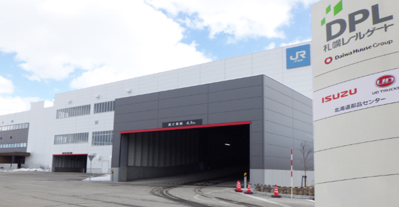
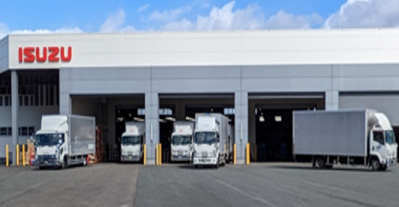
Isuzu delivers service parts in a timely and accurate manner to any location through a network comprising the Mother Parts Center (Tochigi, Japan) and regional parts centers in Japan and overseas. Furthermore, while Isuzu and UD Trucks previously handled parts supply separately, since 2023 the two companies have been promoting logistics integration—including joint warehouse operations and joint distribution—starting with the Tohoku region. This integration has now been completed in the Hokkaido, Tohoku, Chubu, Kansai, and Kyushu regions, with the remaining Kanto region scheduled for completion within the current fiscal year. Through this initiative, Isuzu aims to improve the overall supply capabilities of the Isuzu Group, including UD Trucks, while also addressing social issues such as the 2024 logistics problem, labor shortages, and carbon neutrality.

Domestic
Seven regional parts centers supply service parts to the service sites of Isuzu dealers.

Overseas
In addition to supplying distributors in each region, Isuzu has regional parts centers in the Near and Middle East, North Africa, North and Central America, Europe, ASEAN, and Oceania.

Improvement of Maintenance Engineering
Isuzu World Service Skills Competition (I-1GP)
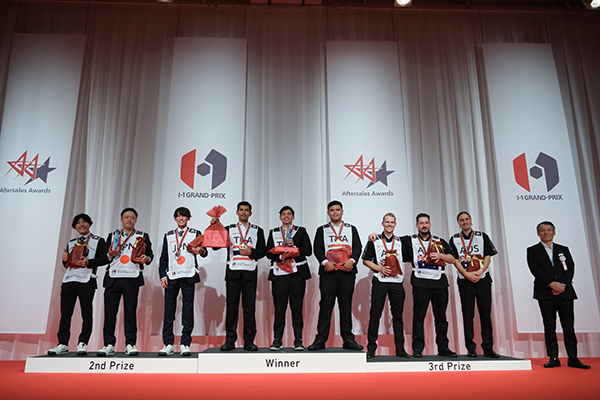
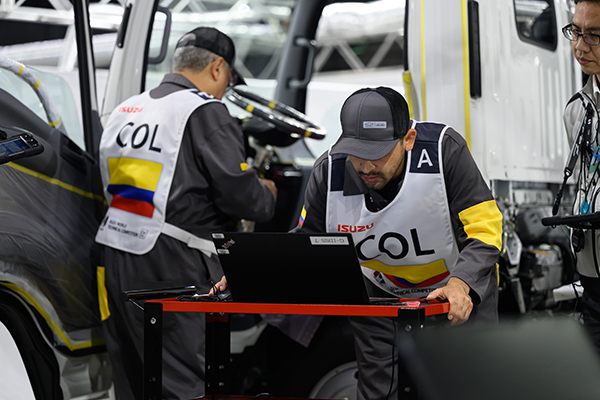
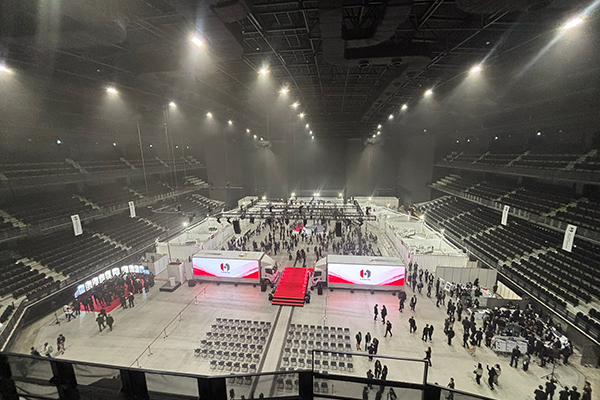
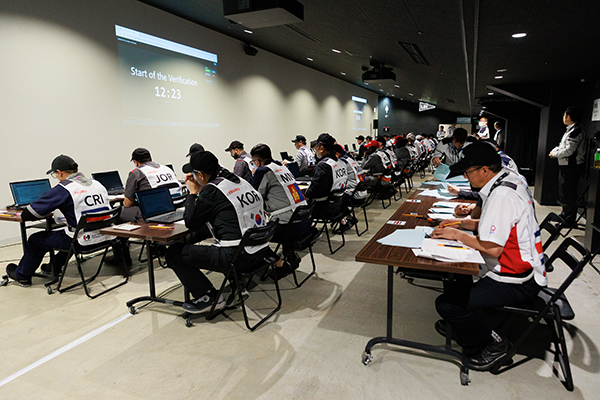
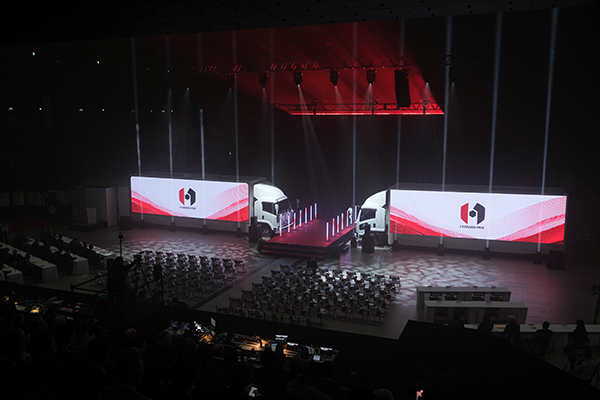
The Isuzu World Service Skills Competition (I-1GP) gathers outstanding service staff and engineers from countries and regions around the world to compete in technical skills and knowledge. It is a global competition that aims to raise the maintenance skills of engineers belonging to the Isuzu Group. By having countries and regions compete against one another in skills and knowledge, I-1GP seeks to raise service levels in every country and region so that Isuzu customers can enjoy high-quality service anytime, anywhere. The competition has been held since 2006. Amid changes in the business environment surrounding the Company as well as social changes such as the COVID-19 pandemic, the competition has continued to evolve flexibly in its format while upholding its philosophy of improving technical skills, and has continued to develop on a global scale. Finalists who advanced from the preliminary rounds were invited to Japan again in 2025, and the event was held on October 29 at PIA Arena MM in Yokohama. The contest included both individual and team competitions. In the team practical competition, teams of two contestants and one coach performed vehicle inspection and fault diagnosis tasks using actual vehicles. In addition to the online theoretical competitions for teams and individuals, an individual practical competition, Virtual Fault Diagnosis, was also held. The competition attracted 111 participants from 37 countries and regions, and the total attendance, including spectators, reached approximately 1,000. As this marked the 20th edition of the competition, a program was also held in which past top performers shared their success stories, helping to foster a stronger drive for technical improvement and boost participants' motivation. Through I-1GP, we aim to raise maintenance skills and communicate the importance of technical training, and we are continuously working to enhance service quality and develop human resources in countries and regions worldwide.
Results of the 20th I-1GP at CV Division
- Team Division: [1st] Thailand, [2nd] Japan, [3rd] Australia; Individual Division: [1st] France, [2nd] Taiwan, [3rd] Hong Kong

National Service/Parts Skill Competition
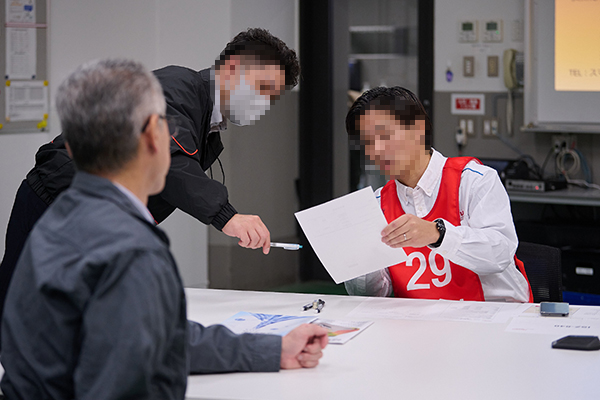
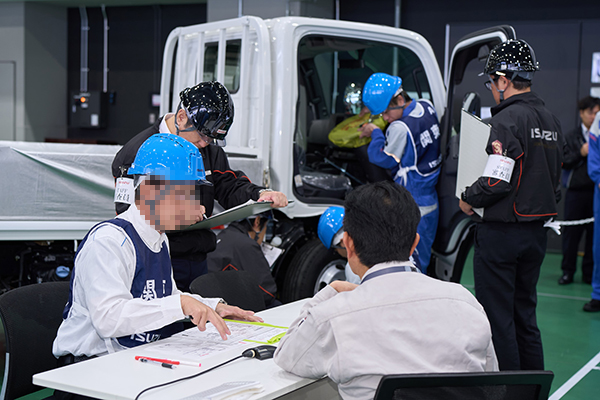
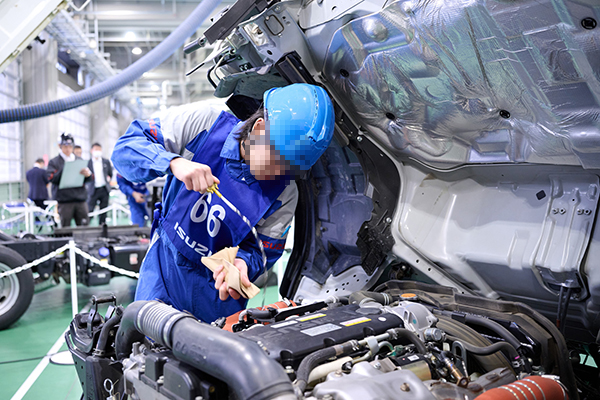
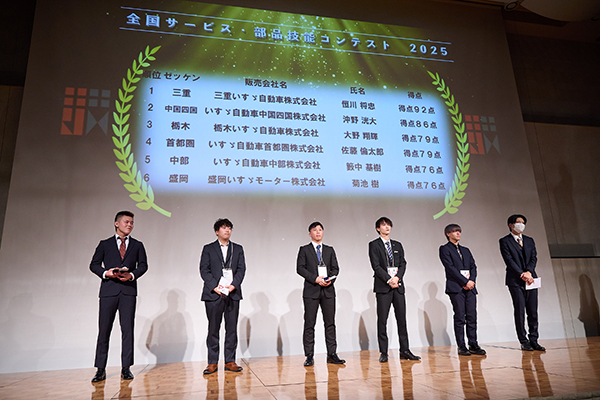
Isuzu holds an annual competition in which after-sales staff who have advanced through preliminary rounds held across the country come together to compete for the top position in Japan, testing the technical skills, knowledge, and customer service abilities they have cultivated through their everyday work. The competition is structured around real-world service scenarios, including the "Engineer Class," which involves fault diagnosis and inspection/maintenance using actual vehicles; the "Advisor Class," which tests interviewing and customer response skills through role-playing; and the "Parts Class," which tests the ability to propose parts. In the "Team Class," in which teams of three compete, participants are tested not only on technical skill but also on the teamwork and overall responsiveness required in a service setting. In addition, the "Young Engineer Class" gives young technicians aged 25 and under, who will lead the next generation, the opportunity to compete in an inspection and maintenance competition, contributing to the development of future core talent.
Through this competition, we aim to further improve technical skills and service quality, while also boosting the morale and solidarity of Isuzu's after-sales staff, and fostering the development of talent capable of providing customers with peace of mind and trust.
Training Employees of Isuzu Dealers
We actively provide training to the service staff and engineers at Isuzu dealers to improve their ability to handle service work, their maintenance skills, and safety in their work on site. We use a variety of training methods—including group training at the Isuzu Monozukuri Service Training Center (MSTC) and remote training using e-learning systems—to raise their skills further while taking into consideration the burden on the work sites.
Results for FY2026
| Number of Courses | Number of Participants | Training Method | |
|---|---|---|---|
| For service engineers | 24 courses | 1,432 | Group |
| For service staff | 1 course | 76 | Group |
| 7 courses | 286 | Remote |
Feedback from participants
- I was able to understand how EVs work and what precautions to take when working with high voltage. After returning to my location, I will share this with my colleagues, thoroughly enforce safe work practices, and put it into use to prevent accidents and injuries. [Service Engineer, Dealerships]
- I learned the necessary knowledge and approach, and was able to deepen my understanding of areas that had remained unclear from hands-on training. [Service Engineer, Dealerships]
- As a first step toward becoming a service advisor, I learned that the way you speak and listen can change the impression customers have of you, which is a basic part of customer service. I would like to be more mindful of providing courteous, attentive service. [Service Staff, Dealerships]
Maintenance Engineering Workshops in FY2026
30 sessions
Customer Support
Various Support Programs, including Fuel Efficiency and Safe Driving Seminars
Isuzu has been offering its customers seminars on fuel-efficient and safe driving since 1995. In recent years, we have been holding seminars tailored to customers' needs, including instruction in how to use vehicle equipment, demonstrations of key points in accident prevention, and study sessions on regulatory trends. Within Japan, these seminars are held at Isuzu Premium Club, a seminar facility exclusively for our customers with its own test courses, located at our Fujisawa Plant and at the Isuzu Hokkaido Proving Ground. Seminars are also held at dealers all over Japan. To date, we have held these seminars overseas for customers from 31 countries. We strive to help our customers in Japan and all over the world to use our vehicles in safer and more eco-friendly ways.
Isuzu Customer Information
The Customer Information section of the Isuzu website alerts users of Isuzu vehicles to matters that could lead to an accident or a malfunction, such as problems in how a vehicle is used.
Addressing Longer Periods of Use
In recent years, along with changes in economic circumstances and other factors, our customers have tended to use their vehicles for longer periods, and their mileage has been increasing. In many cases, the safety of vehicles that have been in use for a long time can be ensured by having inspections and maintenance carried out reliably. Isuzu therefore keeps a sufficient stock of periodic replacement parts on hand as a means of preventing failures and to meet customers' needs for periodic maintenance. We will continue to promote inspection and maintenance that takes into account how vehicles are actually used, including their use over extended periods.
Isuzu Customer Center
Isuzu Customer Center (Japan) was established for the purpose of applying customer feedback to quality improvement. Customer feedback is shared with relevant departments both internally and externally to improve the quality of our products and services. We also provide opportunities to listen directly to the voices of our customers through internal training programs, using them to strengthen our customer-first mindset and our sensitivity to what our customers want.
Customer Testimonials
In addition to comments and requests, we also receive words of appreciation from customers regarding our sales and service operations. These messages provide valuable insight, helping us share examples of excellent front-line service and drive further improvements in quality.
Recently, we received a heartfelt call of gratitude from a customer regarding the response of a dealership service center in Kanagawa Prefecture.
When the customer's vehicle broke down, it became necessary to transfer heavy cargo to a replacement vehicle. This would have placed a significant burden on the customer and the driver alone, but around 10 staff members, led by the branch manager, naturally gathered to help, saying, "Let's do this together," and worked carefully through to the end on a cold, snowy night. Deeply moved by their dedication, the customer called Isuzu Customer Center, wanting everyone at Isuzu to know that such wonderful people exist. The feedback was shared with the dealership's head office, and we understand it was subsequently shared company-wide within the dealership as well.
Going forward, Isuzu Customer Center will continue to share such customer feedback with dealerships and relevant internal departments, helping to spread excellent front-line service and contribute to quality improvement across Isuzu as a whole.
Breakdown of Calls Received by the Isuzu Customer Center in FY2026

Intangible Support
MIMAMORI (Telematics for Commercial Vehicles)
Isuzu has also devoted effort to supporting commercial vehicles in intangible ways. The symbol of this effort is MIMAMORI, a telematics service for commercial vehicles. It reads data from the control computer installed in the vehicle and links it by data communication to support operation management and fleet tracking. MIMAMORI packages a range of content: support for day-to-day legal compliance such as driving reports, digital tachographs, and labor management; full-scale fleet tracking functions for identifying a vehicle's current location and condition; and support for eco-driving, for the practice of safe driving, and for driver training. It is a service that contributes significantly to making our customers' operation management more efficient.
PREISM (Advanced Genuine Maintenance Service Utilizing Vehicle Data)
PREISM, an advanced genuine maintenance service, provides predictive and preventive maintenance at Isuzu service centers before a malfunction occurs, based on condition data transmitted from vehicles. This helps to shorten the downtime of vehicles and maintain their operation.
- Prevention:
Servicing details and maintenance cycles differ depending on the status of use of the vehicle. However, PREISM tracks condition data for each vehicle, making it possible to perform exactly the predictive and preventive maintenance best suited to each individual vehicle and so prevent breakdowns before they occur. - Immediate repairs:
Even if a malfunction does occur, our Isuzu service centers can predict the servicing required from the fault data obtained before the vehicle is brought in, so servicing time can be shortened. This also reduces downtime and allows the vehicle to operate with greater peace of mind. The full lineup of the heavy-duty GIGA, medium-duty FORWARD, and light-duty ELF trucks comes with a data transmission terminal as a standard feature, providing PREISM to support stable operation of a customer's vehicle.

EVision
Alongside the launch of Isuzu's first mass-produced battery electric vehicle (BEV), the ELF (N-Series) EV, Isuzu has developed the total solution program EVision* to support customers considering introducing commercial BEVs and has begun service provision. The support provided in EVision includes finding solutions to EV introduction issues, quantifying the CO2 emission reduction benefits, and proposing further decarbonization initiatives to move toward carbon neutrality.
- *"EVision" combines the "EV" of electric vehicles with "Vision" in its many senses including sight, foresight, and future prospects. It expresses Isuzu's stance and initiatives: making visible the issues and the vehicle operation involved in introducing EVs and providing forward-looking solutions, thereby showing customers the prospects for achieving carbon neutrality.
Operational Quality Improvement
Basic Approach to Operational Quality Improvement
Isuzu's mission represents our determination to go beyond our previous corporate philosophy of "Supporting Transportation." Together with our customers and partners, we take the initiative in creating transportation for all goods and people on Earth, delivering new value in transportation — including addressing the need to attain carbon neutrality and contributing to the evolving logistics industry — and thereby enriching society. The quality of our products and services is built on the quality of the work of each and every employee. Believing that raising the quality of every individual's work — and not only that of the divisions directly involved in product quality — creates the quality that meets customer needs, Isuzu works to raise quality awareness and quality knowledge.
Education for Raising Awareness and Knowledge among Employees
The foundation of work is the experience, knowledge (tools and methods), and skills possessed by each individual. But even with abundant experience, knowledge, and skills, it does not necessarily follow that the work will be performed to a high standard. For employees to make the most of their abilities and do better work, it is essential that they remain motivated to do a good job. Isuzu therefore works to improve operational quality by providing employee education aimed both at raising awareness and at building knowledge.
Discussions among Employees
To raise awareness of operational quality, Isuzu has employees hold repeated discussions about what constitutes good work from the customer's perspective, drawing on the calls received by Isuzu Customer Center and on the Quality Month* message delivered from senior management to employees each November. During Quality Month in particular, the aim is for each individual to consider what "good work" means to them, to gain insights and hints on how to achieve it, and to put those insights into action.
- *Quality Month: The Union of Japanese Scientists and Engineers, the Japanese Standards Association, and the Japan Chamber of Commerce and Industry have designated every November as Quality Month for the promotion of quality improvement activities.
Quality Month Message for FY2026
Theme: Let's work together with flexible thinking and take the initiative to create "good work"!
Theme background:
Amid significant changes in the social environment—including geopolitical risks, tightening environmental regulations, and labor shortages—we are required to deliver results while adapting to change, such as by promoting localization and local procurement and improving operations through AI and digital technology. To this end, we believe it is important to cooperate with colleagues, respect diverse opinions and ways of thinking, approach challenges with flexible thinking, and have each individual think and act on their own initiative to create "good work." We chose this theme with these beliefs in mind.
Quality Awareness Education for Isuzu Dealers
To raise the quality awareness of all employees of the Isuzu Group, quality awareness training is provided to dealers across Japan to reinforce the importance of quality-related tasks such as the accurate and prompt provision of information, the reliable collection of defective parts, and the early implementation of recall repairs.
Number of Locations Where Training Was Held in FY2026
22 locations
Improving Knowledge (Knowledge-Enhancing Program)
As a quality-related knowledge education program for employees, we conduct legal education focusing on the Road Transport Vehicle Act and the recall system, with the aim of familiarizing employees with the laws relating to the quality of Isuzu products. In addition, several employees each year take the QC Seminar Basic Course*, which is run to train experts in comprehensive quality control, thereby developing people who can drive quality improvement in the workplace.
Results in FY2026
Road Transport Vehicle Act/Recall System: Not conducted; QC Seminar Basic Course*: 14 participants
- *Conducted by the Union of Japanese Scientists and Engineers