- Sustainability TOP
- Environment
- Environmental Risk Prevention Measures
Environmental Risk Prevention Measures
Basic Approach
The Isuzu Group has set the Aspiration of "Safe, reliable operations and products" as part of Isuzu Environmental Vision 2050. By strengthening our environmental management foundation and supplier engagement, we will work to prevent environmental risks.
| Isuzu Environmental Vision 2050 | 2030 Environmental Roadmap | |
|---|---|---|
| Aspiration | 2030 Challenge | Global Action |

Safe, reliable operations and products |
|
|
Initiatives
Promoting Water Resource Conservation
Understanding and Responding to Water-Related Risks
In recent years, climate change has heightened concerns about the occurrence of water-related risks, such as risks to the stable supply of water resources and river flooding. Since fiscal 2016, Isuzu has been using AQUEDUCT, a global water risk evaluation tool, to conduct surveys on water risks. The surveys have confirmed that while Isuzu uses groundwater and tap water, there are no urgent issues related to water use itself. However, they have also revealed that, depending on geographic conditions, there are operational risks and impacts on the supply chain arising from flooding, drought, or the depletion of water sources caused by extreme weather such as heavy rainfall. In view of these findings, we are advancing measures to address water risks, including reducing water resource consumption, in light of the risks to our operations and business.
Building a Society Free of Water Stress
The Isuzu Group is working to contribute to building a society free of water stress, where all people have access to safe water with peace of mind.
Isuzu Gives Water...for Life
The Isuzu Group's 21 companies in Thailand are collaborating with Thailand's Department of Groundwater Resources and regional authorities on the Isuzu Gives Water...for Life project, which contributes to building a water-stress-free society. The project installs water purification systems to provide access to drinking water at schools in outlying areas of Thailand struggling with polluted water. Through the project, teachers and students learn how to manage and maintain the systems so they are able to sustainably secure access to drinking water. Launched in 2013, the project had been carried out 46 times as of March 2026.
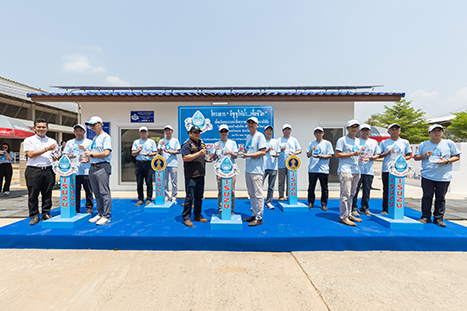
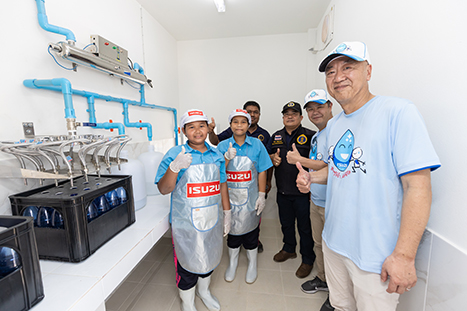
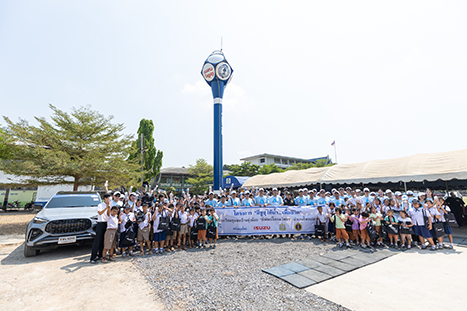
Isuzu Gives Water...for Life Project
Thorough Chemical Substance Management
We take thorough measures to minimize the environmental risks associated with chemical substances used in our business activities and contained in our products. In fiscal 2026, there were no accidents involving chemical substances.
Management of Chemicals Used in Business Activities
To reduce environmental risks from chemicals used in our business activities (such as paints and lubricants) and to ensure employee safety, we have established internal regulations that require advance applications for the use of new chemicals. These applications are reviewed based on laws such as the Chemical Substances Control Law*1, the Industrial Safety and Health Act, and the Poisonous and Deleterious Substances Control Act to determine whether the chemicals may be used. Based on the results of these advance reviews, necessary measures are implemented before the chemicals are used. In fiscal 2026, we conducted advance reviews for 215 chemicals. Additionally, we have created a database for the chemicals used at our business sites, which includes information on their chemical composition and usage amounts. We register new information from advance applications as it arises and update the registered information as appropriate to strengthen management. This database enables us to properly submit the Pollutant Release and Transfer Register (PRTR) notifications required under the PRTR Act*2, and to respond appropriately to amendments to the Chemical Substances Control Law, the Industrial Safety and Health Act, the Poisonous and Deleterious Substances Control Act, and the PRTR Act. Furthermore, by referring to the information in this database, we are working to reduce the use of harmful chemical substances by switching to chemicals with lower environmental impact and reviewing our processes.
- *1Chemical Substances Control Law: Act on the Evaluation of Chemical Substances and Regulation of Their Manufacture, etc.
- *2Act on Confirmation, etc. of Release Amounts of Specific Chemical Substances in the Environment and Promotion of Improvements to the Management Thereof (PRTR Act)
Reducing VOC Emissions
Isuzu is committed to reducing emissions of volatile organic compounds (VOC) in line with the voluntary initiative promoted by the Japan Automobile Manufacturers Association. We work to reduce VOC emissions from our plants by taking measures such as recovering VOCs and reviewing our painting processes.
Management of Chemicals Contained in Products
From the design and development stages, we give due consideration to the chemical substances contained in raw materials and components, and we comply with the chemical substance regulations of each country, including Japan's domestic laws, the European REACH Regulation, the ELV Directive and ELV Regulation, and the U.S. Toxic Substances Control Act (TSCA). In light of regulatory trends in each country, Isuzu specifies the chemical substances that it prohibits or controls in the Isuzu Technical Standards, and applies these standards to the raw materials and parts used in its products. For information on the chemical substances contained in parts, we use the International Material Data System (IMDS), the automotive industry's standard global system for communicating information on chemical substances in products, and we manage the information provided by our business partners in our internal system. We compile this data as appropriate to verify regulatory compliance and to make the necessary notifications and reports, and we also use it to reduce chemical substances that become newly subject to regulation.
Management Across the Supply Chain
Isuzu uses the self-assessment sheet attached to the Guidelines for the Management of Chemical Substances in Products, jointly formulated by the Japan Automobile Manufacturers Association and the Japan Auto Parts Industries Association, to exchange information with our business partners on their management systems and initiatives. Through this, we aim to raise the level of chemical substance management across the entire supply chain.
Ozone-Depleting Substance Emission Control
In accordance with the Act on Rational Use and Proper Management of Fluorocarbons, which came into force in 2015, Isuzu implements proper management across all its sites, including reinforcing inspections of refrigerants in fluorocarbon-using equipment such as commercial refrigeration and air conditioning systems. Additionally, when equipment is replaced, we promote the introduction of non-fluorocarbon equipment to advance the control of ozone-depleting substance emissions. In fiscal 2026, the amount of fluorocarbon leakage was below the statutory reporting threshold of 1,000 t-CO2/year. In recognition of these efforts, Isuzu was selected in fiscal 2026 as one of the 108 companies (7% of all companies surveyed) rated A, the highest rank, in the 5th JRECO Fluorocarbon Measures Rating conducted by the Japan Refrigerants and Environment Conservation Organization. This is the fourth consecutive year, since fiscal 2023, that Isuzu has been rated Rank A. Moving forward, Isuzu will continue to promote initiatives to reduce fluorocarbon leakage through appropriate refrigerant management in accordance with the law, thorough equipment inspections, and the adoption of non-fluorocarbon refrigerants.
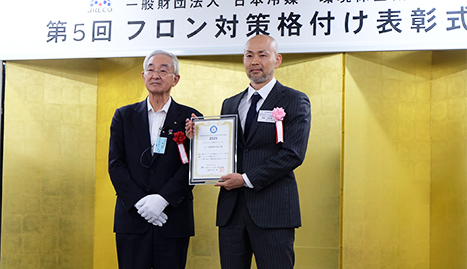
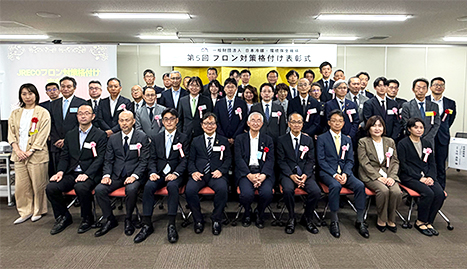
5th JRECO Fluorocarbon Measures Rating Awards Ceremony
Soil Contamination Management
To prevent health hazards caused by soil contamination, Isuzu conducts land contamination surveys in accordance with the Soil Contamination Countermeasures Act and local ordinances when undertaking construction projects of a certain scale or new building developments. In fiscal 2026, Isuzu carried out construction work involving soil contamination surveys, and the surveys confirmed no soil contamination exceeding the applicable standards. Isuzu will continue to reliably survey contamination conditions and take appropriate measures in all construction work.
Management of Air Pollutants and Wastewater
At Isuzu's plants, we properly manage soot- and smoke-emitting facilities such as boilers. We confirm that air pollutants in exhaust gases, including NOx (nitrogen oxides) and SOx (sulfur oxides), are within regulatory limits. Wastewater from our plants is treated in treatment facilities before being discharged into sewer systems or public water bodies, and the discharged water is analyzed regularly to confirm that it is within regulatory limits.